
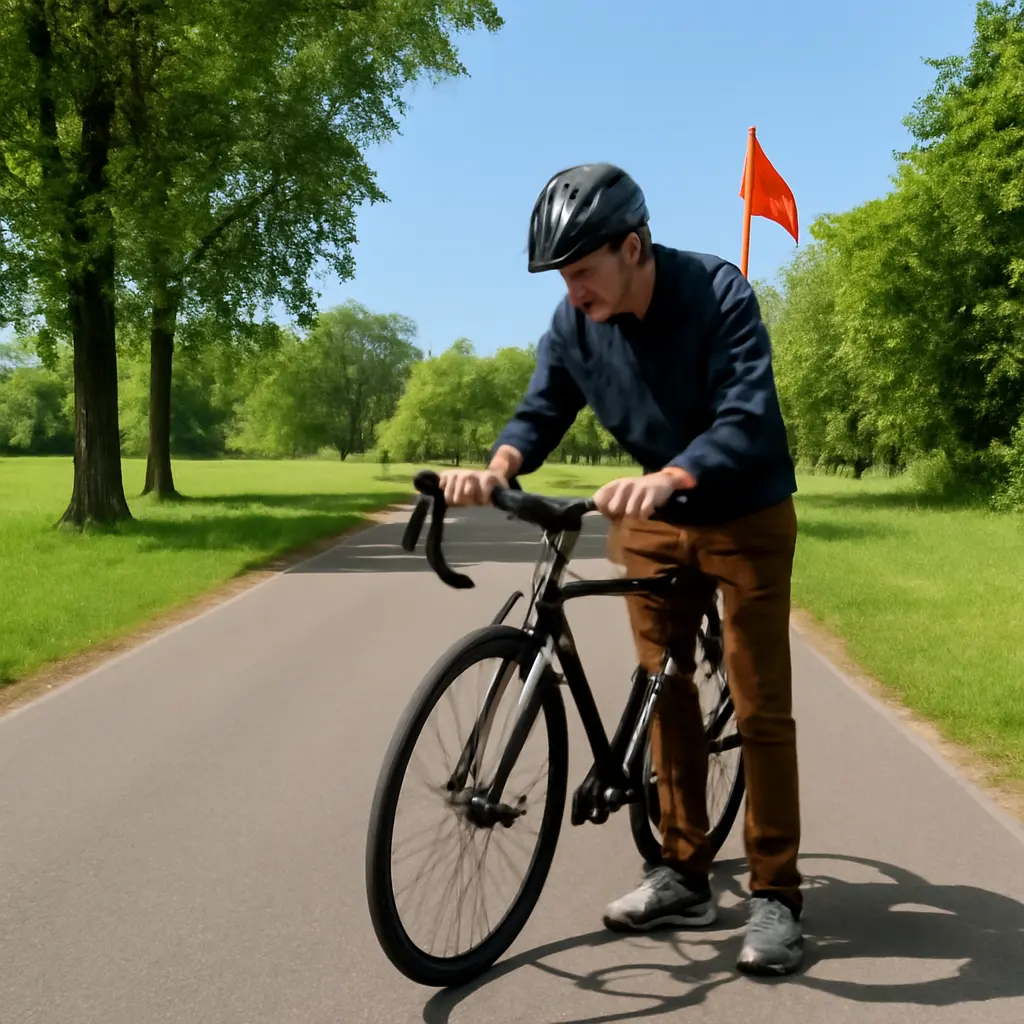
Bicycle visibility failures—being hard to see, hard to recognize, or noticed too late—can turn an ordinary ride into a serious crash risk. Lights, reflective gear, and correctly mounted flags help address different parts of that problem, but none guarantees that a driver will see a rider. The National Highway Traffic Safety Administration (NHTSA) recorded 1,105 bicyclist deaths in U.S. traffic crashes in 2022, underscoring why visibility deserves attention alongside safe roads, speed management, and attentive driving. This guide explains what visibility means, how lights, flags, and reflective materials work, what research and safety rules say, and how riders can build a more reliable visibility setup.
Visibility equipment reduces some risks, but cannot prevent every crash
Bicycle visibility is the extent to which other road users can detect a cyclist, identify the cyclist as a moving road user, and judge the cyclist’s position and direction in time to respond. It is not a single product or a promise of safety. Visibility depends on lighting, contrast, distance, weather, background clutter, viewing angle, and whether a driver is looking at the right place.
The distinction matters because a rider can be technically visible yet still be overlooked. A front lamp may help a driver detect a bicycle at night, while side reflectors can help at an intersection; neither ensures that a turning driver yields. The National Safety Council and NHTSA identify multiple contributing factors in bicycle crashes, including road-user behavior and roadway conditions, so visibility equipment should complement—not replace—predictable riding, suitable speed, and safer infrastructure.
Bicycle lights improve active visibility and illuminate the route
A bicycle light is an electrically powered device that emits light to help a rider see, help others detect the bicycle, or do both. The American National Standards Institute and the Illuminating Engineering Society publish performance standards for bicycle lighting, while local laws set minimum equipment requirements. Brightness alone is not a complete measure of usefulness: beam shape, mounting position, runtime, aiming, and visibility from the side also matter.
Lights are especially important because passive reflectors generally need an external light source, such as vehicle headlights, to shine back toward an observer. Active lights emit their own light, which can make the bicycle easier to detect in darkness, twilight, rain, or shadow. They cannot, however, guarantee recognition or prevent a driver from failing to yield.
Steady and flashing modes serve different purposes
A steady beam provides a continuous reference for the rider’s position and can illuminate the road. A flashing light may attract attention, particularly in daylight, but a flash-only setup can make it harder for other road users to judge distance and closing speed. For that reason, many safety organizations recommend using a steady front light at night, with a flashing mode as an additional conspicuity aid when appropriate.
The U.S. Consumer Product Safety Commission’s bicycle regulations require a front-facing white reflector on new bicycles sold in the United States, but lighting laws for riders vary by state and locality. For example, California requires a white front light visible from 300 feet when riding at night, along with rear and side visibility equipment. Riders should check the rules where they ride rather than assume that one national lighting requirement applies everywhere.
Aim, placement, and maintenance affect real-world performance
A front lamp aimed too high can glare into the eyes of drivers and pedestrians; aimed too low, it may provide too little warning at distance. A rear light should be mounted where it is not blocked by a bag, clothing, or a seatpost accessory. Side visibility deserves separate attention: a light visible from directly behind may be difficult to see when a vehicle approaches from an angle.
Battery charge, damaged mounts, dirty lenses, and water exposure can undermine performance. Before a night ride, check that both lights are securely attached, charged, and visible from the angles that matter. A practical setup uses a road-illuminating front beam, a rear light, and reflectors or additional lights that improve side detection.
Reflective materials and flags improve detection in specific conditions
Reflective material returns light toward its source, making it conspicuous when illuminated by headlights. A bicycle reflector, reflective ankle band, jacket panel, or wheel element can contribute to visibility, but performance depends on a light source and the angle between the source, material, and observer. The National Highway Traffic Safety Administration advises cyclists to use reflective or bright clothing and to make themselves visible, particularly in low-light conditions.
A bicycle safety flag is a conspicuity marker—usually a bright, often fluorescent flag mounted on a flexible pole. Unlike retroreflective material, fluorescent fabric can stand out in daylight by converting ultraviolet light into visible light, but it does not glow in darkness. A flag may help drivers notice a bicycle or trailer above some visual obstructions, yet it cannot reliably communicate a rider’s speed, direction, or intended movement.
Reflectors work best when they match the viewing angle
Pedal and ankle reflectors create a moving pattern that can help an observer recognize a bicycle rather than mistake it for a fixed roadside object. Wheel and frame reflectors can add side visibility, an important benefit at junctions where traffic approaches from the left or right. A single rear reflector is not a substitute for a rear light when a rider needs to be seen in conditions where headlights are absent or poorly aligned.
The U.S. Federal Motor Vehicle Safety Standard for new bicycles specifies reflectors, including front, rear, pedal, and side reflectors, subject to the regulation’s requirements and permitted alternatives. These are manufacturing requirements, not a guarantee that every in-use bicycle remains properly equipped. Reflectors can become dirty, detached, cracked, or hidden by accessories, so riders should inspect them regularly.
Flags help with conspicuity but have practical limits
Flags are most commonly used on recumbent bicycles, trailers, mobility devices, and other low-profile setups. Their height and bright color can make a low object more noticeable against a roadway or roadside background. The benefit is context-dependent: a flag may be obscured by traffic, vegetation, or roadside clutter, and its narrow surface can become less visible when viewed edge-on.
There is no universal evidence-based rule that a flag makes a rider safe at a particular distance. Treat it as one layer in a visibility system, not as a replacement for lights, reflectors, and cautious positioning. Secure the pole so it cannot swing into the wheel, interfere with steering, or create a snag hazard.
Visibility failures happen when detection is delayed or attention is divided
A visibility failure occurs when a road user does not detect a cyclist, detects the cyclist too late, or misjudges the cyclist’s location or movement. Darkness and poor weather can contribute, but so can visual clutter, a low contrast between rider and background, blocked sightlines, glare, and an observer’s inattention. “I didn’t see the bicycle” describes an outcome; it does not by itself establish why a crash happened or excuse a driver’s duty to look.
The Federal Highway Administration’s discussions of bicycle conspicuity emphasize that seeing and recognizing a road user involve more than making an object bright. Equipment can improve detection, but roadway design and driver behavior also shape risk. Protected bicycle facilities, lower vehicle speeds, clear intersections, and adequate sight distance address hazards that personal equipment cannot solve alone.
Night riding requires multiple kinds of visibility
At night, riders need to see the path ahead and be seen by others. A front light helps with the first task and contributes to the second; a rear light and correctly placed reflectors help drivers approaching from behind or from the side. Bright clothing alone is not enough in darkness, because fluorescent colors lose much of their daylight advantage without ultraviolet light.
The Insurance Institute for Highway Safety reports that bicyclist deaths are more common in urban areas and that many fatal crashes occur away from intersections, though circumstances vary across crashes. These patterns reinforce the need to consider route, speed, lighting, and traffic exposure together rather than treating a lamp as a complete safety solution.
Daytime conspicuity and intersection visibility are different challenges
During daylight, a flashing daytime-running light can attract attention, while fluorescent clothing may contrast with the surroundings. At intersections, however, a rider can be hidden behind a vehicle pillar, parked car, or other obstruction. Side-facing lights and reflective wheel or pedal elements can help make lateral movement more noticeable, but they do not remove blind spots or guarantee that a turning driver will yield.
A 2017 Cochrane review of bicycle visibility aids found evidence that some conspicuity interventions can improve drivers’ detection and recognition of cyclists in experimental settings. The review also noted limits in the evidence linking those detection improvements directly to fewer crashes. This distinction is essential: visibility studies can show that a rider is noticed more often under test conditions without proving that a particular product prevents real-world collisions.
A layered visibility plan is more dependable than a single device
A layered approach combines active lights, passive reflectors, visible clothing, predictable riding, and route choices suited to conditions. The exact mix depends on whether the ride is in daylight, dusk, darkness, rain, or a low-traffic environment. The goal is not simply maximum brightness; it is to make the rider detectable from relevant directions without creating glare or relying on one fragile piece of equipment.
Use a condition-based checklist
- Before riding in darkness, use a white front light and a red rear light, and confirm local legal requirements.
- Check side visibility with wheel reflectors, reflective details, or lights visible from more than one direction.
- Keep lights clean, charged, firmly mounted, and unobstructed by bags or clothing.
- Wear bright or fluorescent clothing by day and reflective details at night; do not assume one works equally well in both conditions.
- Use a flag where it improves the profile of a low bicycle or trailer, but do not rely on it as a substitute for lighting.
- Choose routes and positions that preserve sightlines, and ride predictably while signaling turns and lane changes.
Infrastructure and driver attention remain essential
Personal visibility equipment cannot make a dangerous road design safe. Protected lanes, intersection treatments, slower speeds, adequate lighting, and unobstructed sightlines can reduce conflicts for riders regardless of the equipment they own. NHTSA’s Safe System approach similarly treats safer roads, safer speeds, safer vehicles, and safer road users as connected parts of traffic safety.
For communities, the practical lesson is to pair public education with street design and speed management. For riders, it is to use reliable lights and reflectors while recognizing that responsibility for preventing crashes is shared across road users, transportation agencies, and vehicle designers.
Conclusion: Visibility works best as one layer of bicycle safety
Lights provide active visibility and help riders see; reflectors return headlight beams; fluorescent clothing can improve daytime contrast; and flags can raise the profile of low bicycles or trailers. Each has limitations shaped by angle, lighting, background, maintenance, and human attention. Research supports the idea that visibility aids can improve detection in some settings, but it does not justify promising that any one device will prevent a crash.
Use a well-maintained, multi-directional setup, check local lighting rules, and adapt equipment to the conditions. At the same time, support safer speeds, clearer sightlines, and bicycle-friendly infrastructure. For further guidance, consult NHTSA, your state transportation agency, and local bicycle-safety organizations for current laws and practical recommendations.
Sources: National Highway Traffic Safety Administration, Traffic Safety Facts: Bicyclists and Other Cyclists, 2022 Data, https://crashstats.nhtsa.dot.gov/Api/Public/ViewPublication/813590; National Highway Traffic Safety Administration, Bicycle Safety, https://www.nhtsa.gov/road-safety/bicycle-safety; U.S. Consumer Product Safety Commission, 16 CFR Part 1512—Requirements for Bicycles, https://www.ecfr.gov/current/title-16/chapter-II/subchapter-B/part-1512; California Department of Motor Vehicles, California Bicycle Laws, https://www.dmv.ca.gov/portal/handbook/california-driver-handbook/bicycle-lanes/; Federal Highway Administration, Bicycle and Pedestrian Safety, https://highways.dot.gov/safety/pedestrian-bicyclist; Insurance Institute for Highway Safety, Bicyclist Safety, https://www.iihs.org/topics/fatality-statistics/detail/bicyclists; Kwan, I. and Mapstone, J., Interventions for increasing pedestrian and cyclist visibility for the prevention of death and injuries, Cochrane Database of Systematic Reviews, 2006, https://doi.org/10.1002/14651858.CD003438.pub2; National Safety Council, Bicycle Safety, https://www.nsc.org/road/safety-topics/bicycle-safety


