
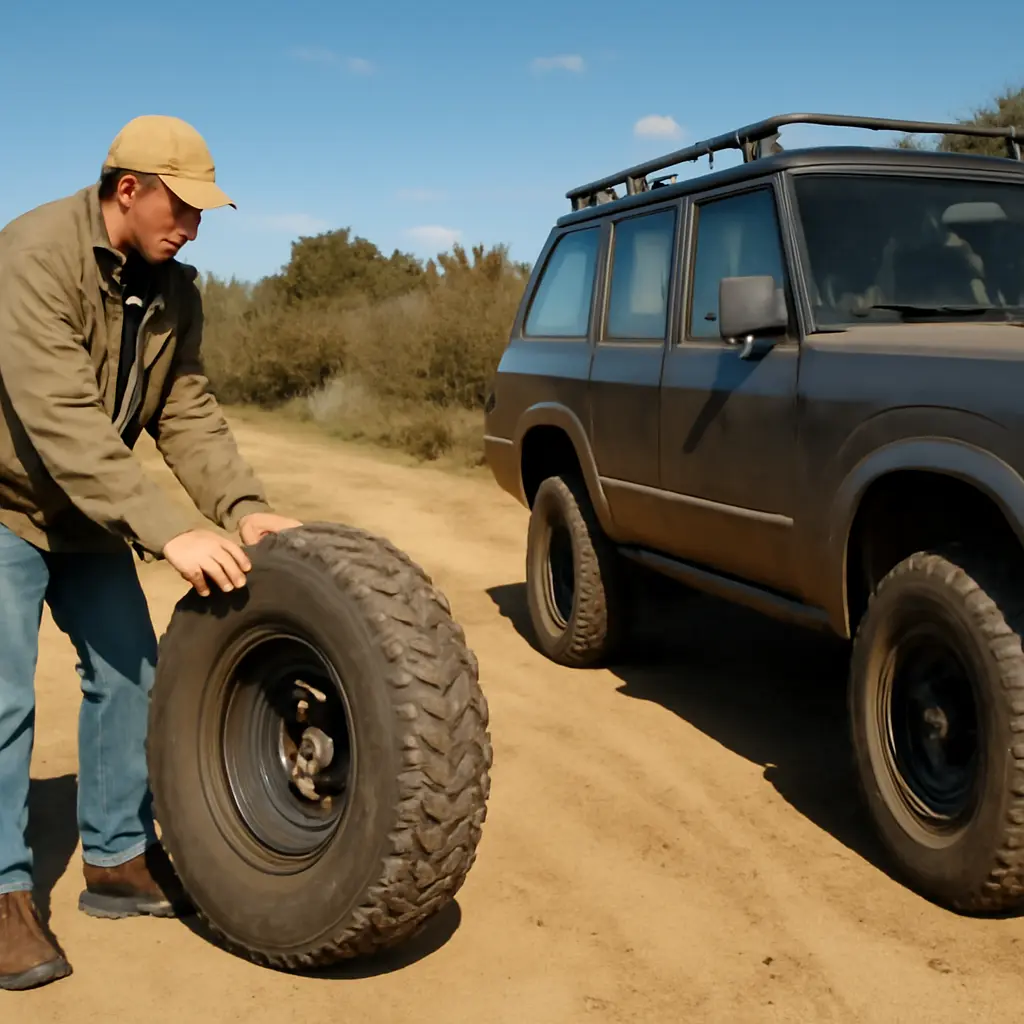
Professional off-roaders treat wheel strength as a system property, not a simple claim that a wheel is “strong.” It depends on the wheel’s material and design, its load rating, the tire and air pressure, the vehicle’s weight, and the impacts and leverage created by terrain. The distinction matters: a wheel can meet a load rating yet still be vulnerable to a sharp rock strike, while a beadlock can help retain a deflated tire without making the wheel indestructible. Understanding load ratings, impact and fatigue, wheel construction, tire pressure, and inspection practices helps drivers choose equipment and reduce avoidable failures.
Wheel strength depends on load, impact, and fatigue
Wheel strength is the ability of a wheel to carry forces without unacceptable deformation or fracture. In road-use testing, standards such as SAE J2530 evaluate aftermarket passenger-car and light-truck wheels using prescribed tests that include radial fatigue, cornering fatigue, and impact resistance. These are controlled laboratory tests, not guarantees against every off-road strike or operating condition.
The key distinction is between a wheel’s stated load capacity and its resistance to a particular failure mode. A load rating describes a defined capacity; it does not mean the wheel can withstand every combination of heavy vehicle weight, low tire pressure, speed, and sharp impact. Off-road drivers therefore consider both the rating and how forces reach the wheel.
Load rating is a starting point, not a complete strength score
A wheel load rating is the maximum load assigned to that wheel under the manufacturer’s specified conditions. To make a basic axle check, compare the vehicle’s front or rear gross axle weight rating (GAWR) with the combined capacity of the two wheels on that axle. The vehicle’s door-jamb tire placard and owner’s manual provide important vehicle limits; the wheel manufacturer provides the wheel rating.
For example, if an axle is rated for 5,000 pounds, two wheels rated at 2,500 pounds each only equal that figure on paper. That arithmetic does not account for uneven side-to-side loading, modifications, dynamic impacts, or the tire’s own limits. A qualified installer should verify that the wheels, tires, offsets, and vehicle ratings are compatible. Never treat a wheel’s capacity as permission to exceed the vehicle’s GAWR or gross vehicle weight rating.
Impact strength differs from fatigue resistance
Impact strength concerns a short, severe event, such as a wheel hitting a rock edge. Fatigue resistance concerns repeated cycles of loading and unloading, which can gradually initiate or grow cracks. A wheel may survive many ordinary miles and then fail after a damaging strike, or develop fatigue damage after repeated use. Neither appearance nor a single successful trip proves that a wheel is undamaged.
The test categories used in standards such as SAE J2530 help distinguish these performance questions, but laboratory procedures cannot reproduce every trail obstacle, tire pressure, vehicle setup, or driving speed. This is why experienced drivers pair specification checks with conservative driving and post-impact inspection.
Wheel construction changes how strength is achieved
Wheel construction describes how the wheel is formed and assembled. Common categories include cast, flow-formed, and forged wheels. Each method affects design options, mass, manufacturing cost, and the way material is distributed. Construction alone does not establish whether a particular wheel is safe or suitable: the exact model’s rating, test documentation, dimensions, and intended application matter.
Cast wheels: practical, but model-specific
Cast wheels are made by pouring molten alloy into a mold. Casting supports complex shapes and is widely used, but cast wheels vary substantially in design and quality. A cast wheel with a suitable load rating and recognized testing may be a reasonable choice for many vehicles; the word “cast” by itself does not establish a failure threshold.
Flow-formed wheels: formed barrels and targeted material use
Flow forming uses pressure and rollers to shape and stretch the barrel of a cast wheel blank. Manufacturers use the process to alter barrel properties and often reduce mass compared with a conventional design. It does not automatically make every flow-formed wheel stronger than every cast or forged wheel. Compare published specifications and testing for the exact wheel rather than relying on the process name.
Forged wheels: strong potential, not immunity to damage
Forging shapes metal under high pressure, allowing manufacturers to create wheel designs with specific material and structural characteristics. Forged wheels may offer high strength relative to mass, but performance still depends on alloy, design, manufacturing quality, dimensions, and rating. A forged wheel can bend or crack under severe impact; “forged” is not a substitute for a verified load capacity or careful inspection.
Construction comparisons are most useful when they lead to verifiable questions: What is the wheel’s rated load? What testing or certification applies? Is that rating adequate for the vehicle’s axle loads and intended use? Those answers matter more than a broad material label.
Tire pressure and wheel geometry shape trail forces
A wheel does not experience impacts in isolation. Tire pressure, tire size, vehicle weight, wheel offset, and driving speed influence how forces reach the rim. Lower tire pressure can improve traction and help a tire conform to uneven terrain, but it also increases the risk of bead separation, sidewall damage, and rim contact with obstacles. There is no single safe trail pressure for every vehicle and tire combination.
Low pressure can improve traction while increasing exposure
Reducing pressure enlarges the tire’s contact patch and can help it conform to rocks, sand, or other surfaces. At the same time, the tire sidewall becomes more vulnerable to pinching, and the rim may be more exposed to direct contact. The appropriate pressure depends on tire construction, load, terrain, speed, and the tire maker’s guidance. Drivers should use a reliable gauge, reduce speed when aired down, and reinflate before returning to highway speeds according to tire and vehicle guidance.
Beadlocks address bead retention, not overall wheel strength
A beadlock mechanically clamps the tire bead to the wheel, helping retain the tire at low pressures where it might otherwise unseat. It does not make the wheel immune to bending or cracking, nor does it protect the tire from every puncture or sidewall failure. Some beadlock designs may be intended for competition or off-road use and may not be approved for public-road use in every jurisdiction. Check the wheel maker’s instructions and local regulations.
Offset and leverage affect bearings and suspension components
Wheel offset determines where the wheel sits relative to the hub mounting surface. Changing offset can increase track width and alter leverage on wheel bearings and suspension parts. A wider stance may change handling and clearance, but it does not increase the wheel’s rated capacity. Verify fitment and load suitability with the vehicle and wheel manufacturers, particularly when using heavier tires or substantial vehicle modifications.
Professional practice combines selection, driving, and inspection
Skilled off-road drivers reduce risk through a sequence of decisions: select wheels and tires for the vehicle’s actual loads, manage speed and tire pressure for the terrain, and inspect after hard use. This approach recognizes that no wheel material or accessory can compensate for every impact or overload.
Choose wheels using documented specifications
Before purchase, confirm the wheel’s load rating, diameter, width, bolt pattern, center bore, offset, and brake clearance. Ask whether the wheel has been tested to an applicable standard, such as SAE J2530, and obtain the documentation for the specific model. Match wheel and tire capacity to the vehicle’s requirements, and do not exceed the vehicle’s weight ratings.
Drive to limit impact energy
Speed increases the severity of many impacts. Picking a line that avoids sharp edges, easing over obstacles, and avoiding wheelspin followed by sudden traction can reduce shock loads. When a wheel strikes an obstacle hard enough to cause a sudden pressure loss, visible deformation, or unusual vibration, stop in a safe place and inspect rather than assuming the tire alone is at fault.
Inspect after impacts and during routine maintenance
Look for cracks, bends, fresh metal damage, bead-area damage, air loss, and changes in vibration. Check lug nuts using the vehicle or wheel manufacturer’s specified torque and procedure; do not guess or use an impact wrench as a substitute for a torque wrench. If damage is suspected, have the wheel and tire assessed by a qualified professional. A damaged wheel should not be returned to service simply because it still holds air.
A useful visual aid for a fleet or trail group would be a comparison chart showing wheel load rating, axle load, tire capacity, and intended terrain. Such a chart should be treated as a screening tool, not as a substitute for manufacturer specifications or professional inspection.
Conclusion: wheel strength is a system, not a slogan
Wheel strength depends on more than whether a wheel is cast, flow-formed, or forged. Load ratings establish a starting point; impact and fatigue describe different failure risks; tire pressure and geometry change the forces involved; and beadlocks address tire-bead retention rather than wheel durability. Professional off-road practice brings these factors together through verified specifications, measured driving, and timely inspection.
Before the next trail run, check your vehicle’s axle and weight ratings, confirm the wheel and tire capacities, review pressure and fitment guidance, and inspect equipment after hard impacts. For further guidance, consult the vehicle, tire, and wheel manufacturers and a qualified wheel-and-tire professional.
Sources: SAE International, SAE J2530, Aftermarket Wheels—Passenger Cars and Light Truck—Performance Requirements and Test Procedures, https://www.sae.org/standards/content/j2530_202105/; National Highway Traffic Safety Administration, Tire Safety, https://www.nhtsa.gov/vehicle-safety/tires; U.S. Department of Transportation, 49 CFR § 571.110, Tire selection and rims and motor home/recreation vehicle trailer load carrying capacity information for motor vehicles with a GVWR of 4,536 kilograms (10,000 pounds) or less, https://www.ecfr.gov/current/title-49/subtitle-B/chapter-V/part-571/section-571.110


