
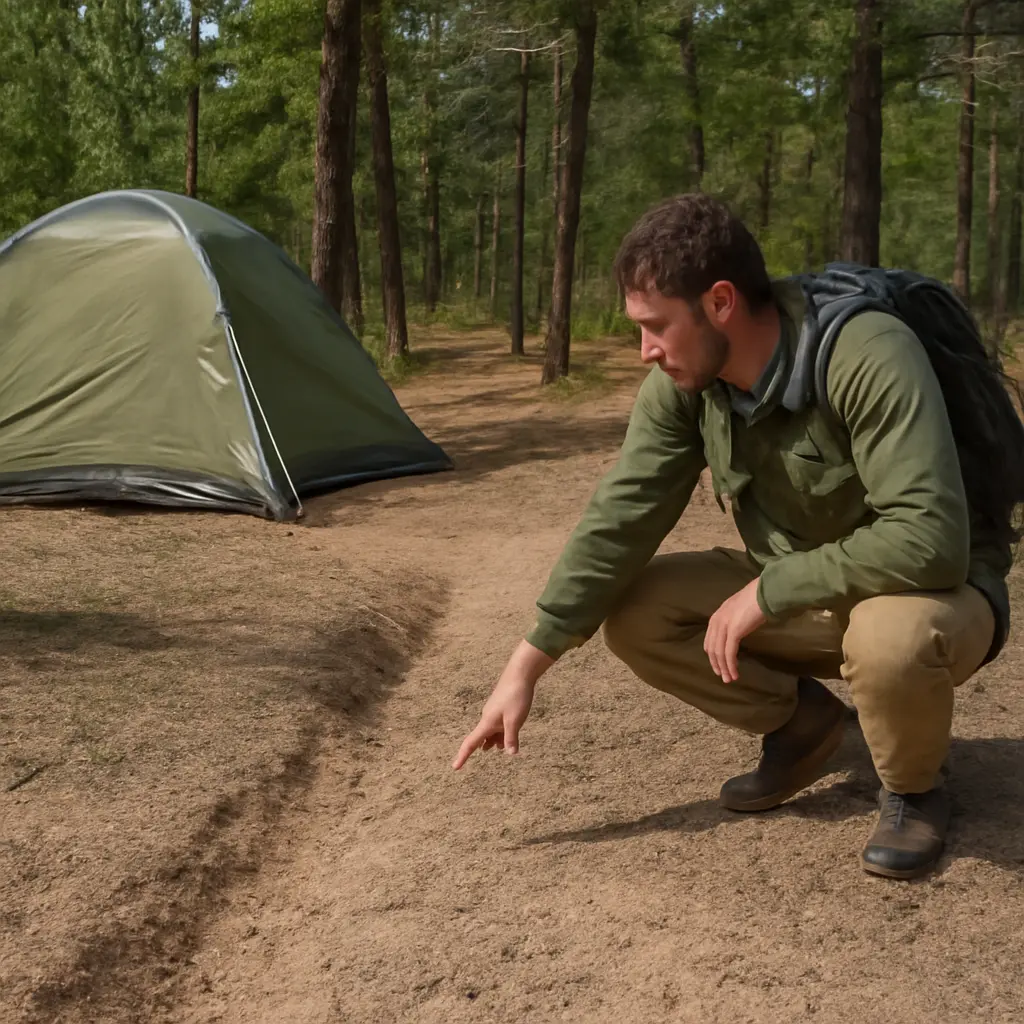
Professional campsite drainage is the planned movement of rainwater and runoff away from tents, sleeping areas, paths, and other facilities without damaging soil or nearby waterways. Guides typically choose naturally well-drained ground first, then use low-impact measures—such as keeping tents out of depressions, directing foot traffic, and protecting existing vegetation—rather than digging channels. This matters because even modest rainfall can collect in compacted or poorly chosen sites, while concentrated runoff can cause erosion and carry sediment into streams. The U.S. National Park Service’s Leave No Trace guidance therefore emphasizes selecting durable, established campsites and avoiding alterations to natural drainage.
How Professional Guides Plan Campsite Drainage
Campsite drainage planning is the assessment and management of water movement around a camp so people and equipment stay dry while the site’s natural hydrology remains as intact as possible. It is not simply a matter of moving water away quickly: a sound plan also avoids sending runoff onto another campsite, cutting into slopes, or concentrating water where it can erode soil. The Leave No Trace Center for Outdoor Ethics recommends camping on established sites where available and placing tents on durable ground, while land-management agencies commonly advise campers to avoid low spots, drainage channels, and areas likely to flood.
Site selection and terrain reading
Site selection is the first and most effective drainage measure. Guides examine the slope, soil, vegetation, nearby watercourses, and signs of past water flow before choosing a tent area. They generally favor a level or gently sloping, durable surface outside depressions and natural channels, while following local rules on distance from water and campsite placement. A shallow swale, flattened vegetation, exposed roots, deposited sediment, or debris caught against plants can indicate where water has flowed or ponded before.
The U.S. Forest Service and National Park Service both advise visitors to avoid camping in washes or other places subject to sudden runoff. This is important even when a channel is dry: rain may fall upstream and reach a campsite without warning. A guide also considers what the ground will become after repeated use. A site that appears dry may turn muddy when its vegetation is trampled and soil is compacted, reducing infiltration and making runoff more likely.
Rainfall, soil, and runoff assessment
Runoff assessment means estimating whether rain will soak into the ground or flow across it. Soil texture, slope, ground cover, and previous disturbance all affect that balance. Sandy or gravelly soils often allow water to infiltrate more readily than compacted fine soils, although local conditions vary. Steeper slopes can move water faster, and bare or trampled ground is more vulnerable to erosion than intact vegetation.
Guides use weather forecasts as part of the assessment, but forecasts do not replace observation of terrain. The National Weather Service notes that flash flooding can occur rapidly, including in areas where it is not raining locally. In canyon country, dry washes and narrow drainage channels are especially hazardous. Where heavy rain or flooding is possible, the safest drainage strategy is usually to relocate to higher, safer ground rather than attempt to modify the site.
How Guides Protect Campsite Drainage
Once a suitable area is selected, guides protect its natural drainage by limiting disturbance and managing where people and equipment concentrate. These practices are closely connected: preserving vegetation helps soil absorb water, while keeping tents and traffic off vulnerable ground prevents compacted surfaces from becoming informal runoff paths.
Tent placement and durable surfaces
Tent placement is the positioning of shelters on durable ground where water is unlikely to pool or flow through. Guides avoid setting tents in depressions, on the bottom of slopes, in streambeds, or directly across visible drainage lines. Where permitted, they use established campsites and already-disturbed surfaces rather than creating new tent pads. They also orient the tent and its doors with expected weather in mind, while avoiding a position that blocks or redirects natural water flow.
The Leave No Trace principle of camping on durable surfaces supports this approach. Durable ground withstands use better than fragile vegetation or wet soil, reducing both trampling and the resulting loss of infiltration. If a site is saturated, guides may choose another location rather than trying to make the ground usable through digging or vegetation removal.
Foot traffic, kitchens, and shared-use areas
Traffic management limits soil compaction and keeps runoff from being funneled into damaging routes. Guides designate existing paths between tents, kitchens, and gathering areas and discourage people from creating multiple shortcuts. They place high-use activities on durable ground and keep cooking, washing, and waste-management areas away from streams and drainage features, following local regulations and low-impact camping guidance.
Compaction matters because it can reduce the amount of rain that enters the soil. Water that cannot infiltrate is more likely to travel over the surface, carrying loose soil with it. The U.S. Department of Agriculture’s Natural Resources Conservation Service identifies soil cover, soil structure, slope, and infiltration as important factors in runoff and erosion. In practical terms, a clear, compacted track can become a channel during a storm, so concentrating use on an existing durable route is generally preferable to spreading impacts across the site.
Low-impact drainage measures
Low-impact drainage measures preserve existing water pathways instead of engineering new ones. Guides may move a tent or gear to higher ground, clear only a permitted and non-sensitive obstruction from an established path, or adjust camp layout so runoff can pass without crossing sleeping areas. They do not assume that digging a trench is an acceptable fix. Trenching can expose soil, accelerate erosion, redirect water toward other users or habitats, and leave a lasting scar.
Leave No Trace guidance advises campers not to dig trenches around tents. In protected areas, site alterations may also violate park or wilderness rules. If water begins to collect, the preferred response is to move people and equipment safely and, when conditions warrant, leave the area—not to excavate or build improvised barriers that could fail or worsen flooding.
Drainage Practices for Different Campsite Settings
The right approach depends on terrain. A forest campsite, a desert wash, and a managed campground have different hazards and rules, but the common principle is to work with natural drainage rather than against it. Guides adapt their assessment to the setting and to the consequences of a storm.
Forest and mountain camps
In forests and mountains, guides look for stable ground away from stream margins, steep slopes, and hollows where water can collect. They avoid trampling wet meadows and fragile vegetation, which can take a long time to recover. On sloping ground, a small change in position can make a meaningful difference, but tents should not be placed where their footprint obstructs a natural flow path or exposes loose soil.
After rain, guides reassess the site rather than relying on its appearance in dry weather. Saturated soil is easier to compact and disturb, and runoff can increase as the ground’s capacity to absorb water is exceeded. If the site becomes unstable or water levels rise, moving camp is safer and more protective than attempting to alter the terrain.
Desert, canyon, and flood-prone camps
In deserts and canyons, drainage planning is primarily a flood-safety decision. Guides avoid dry washes, narrow canyon bottoms, and other low-lying routes that can receive runoff from distant storms. They check forecasts and local alerts, identify escape routes to higher ground, and move camp when thunderstorms or flood warnings create unacceptable risk.
The National Weather Service warns that flash floods can develop quickly and that water may arrive from rainfall far upstream. This is why a dry channel should never be treated as a safe campsite simply because the sky overhead is clear. In these environments, no trench, berm, or tent orientation can substitute for choosing a safe location.
Established campgrounds and managed sites
At established campgrounds, drainage may be supported by graded pads, road culverts, or designed stormwater features. Campers should use the site as intended, keep drains and culvert openings clear of personal gear, and report blockages or erosion to the campground operator. They should not dig into a pad, divert water across a road, or alter a drainage structure without authorization.
For example, a guide leading a group at a developed campground might place tents on the designated pad, keep the group’s walking route on the established path, and notify staff if water ponds because a drain is blocked. That response protects visitors while leaving repairs to the people responsible for the site’s infrastructure.
A Practical Guide’s Drainage Check
A simple pre-camp check helps turn drainage principles into a repeatable routine:
- Check weather forecasts, flood alerts, and local campsite rules.
- Observe slope, depressions, channels, vegetation, and signs of previous flooding.
- Choose an established, durable site outside washes, streambeds, and low spots.
- Place tents and shared-use areas without blocking natural water flow.
- Keep foot traffic on existing routes and avoid disturbing wet or fragile ground.
- Reassess conditions after rain; move camp if water, instability, or flooding risk increases.
- Leave the site without trenches, berms, or other unauthorized alterations.
A diagram of a campsite can make these choices easier to visualize: show a tent on gently sloping durable ground, a natural drainage line left unobstructed, and a low-lying wash marked as a no-camp zone. Such a diagram should clarify safe placement, not imply that campers should construct channels.
Conclusion: Drainage Begins with the Campsite Choice
Professional guides manage campsite drainage first through terrain reading and careful site selection, then by protecting durable surfaces, concentrating foot traffic, and avoiding unnecessary ground alteration. Forest and mountain camps call for attention to slope, soil, and fragile vegetation; desert and canyon camps require particular caution around dry washes and flash floods; developed campgrounds require users to respect designed drainage systems. Across all settings, digging trenches is not a responsible substitute for choosing safe ground.
Good drainage practice protects campers, reduces erosion, and helps keep sediment out of nearby waterways. Before your next trip, check local guidance and weather alerts, choose an established site away from natural channels, and be ready to relocate if conditions change.
Sources: Leave No Trace Center for Outdoor Ethics, The 7 Principles, https://lnt.org/why/7-principles/; National Park Service, Camping, https://www.nps.gov/subjects/camping/index.htm; U.S. Forest Service, Leave No Trace, https://www.fs.usda.gov/visit/know-before-you-go/leave-no-trace; National Weather Service, Flood Safety, https://www.weather.gov/safety/flood; USDA Natural Resources Conservation Service, Soil Quality Indicators: Infiltration, https://www.nrcs.usda.gov/resources/education-and-teaching-materials/soil-quality-indicators-infiltration.


