
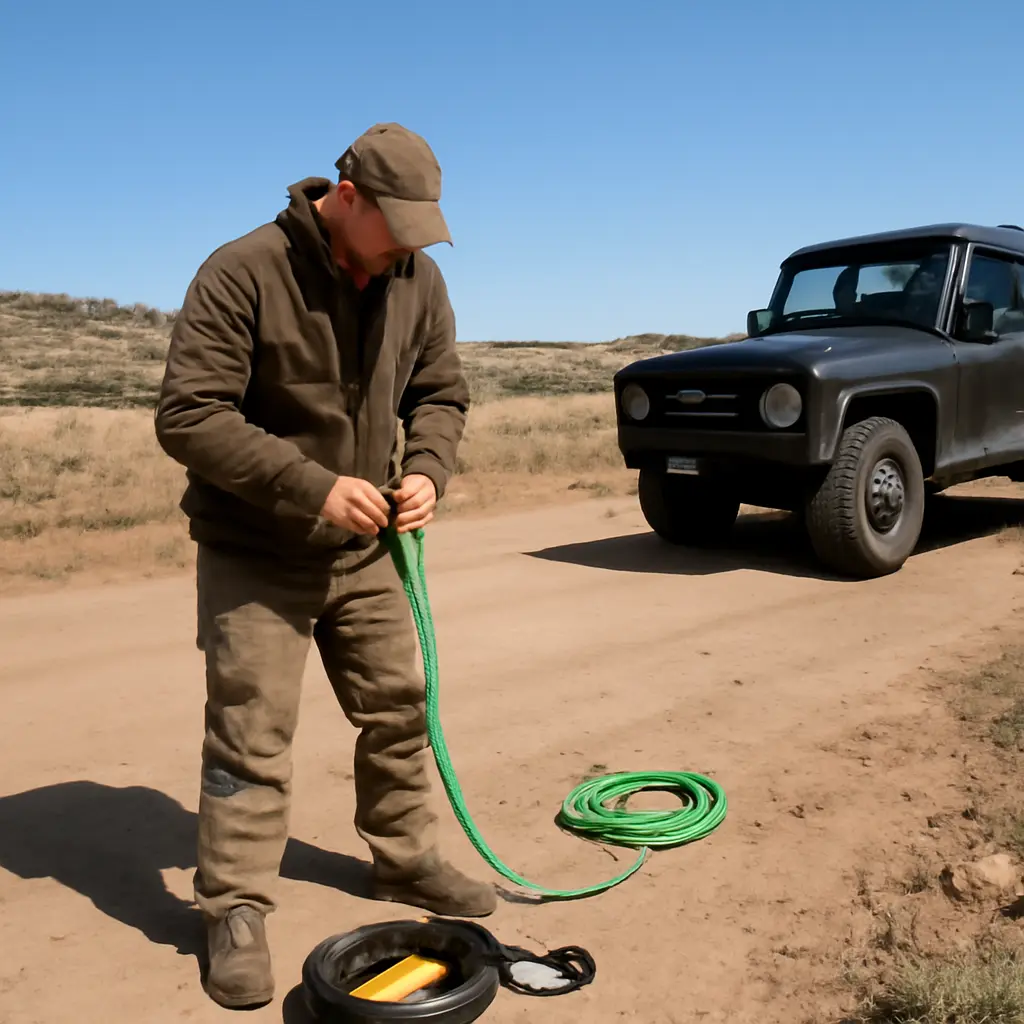
A soft shackle is a high-strength loop of synthetic rope used to connect recovery gear without a heavy steel bow shackle. In off-road rescues, soft shackles can make connections lighter and easier to handle, but they do not make a recovery automatically safer: correct sizing, compatible attachment points, sound technique, and careful inspection still matter. Their practical impact is clearest when comparing connection choices, understanding load limits and failure risks, and applying them in real recovery setups.
Soft-shackle design changes off-road recovery connections
A soft shackle is generally a closed loop of braided synthetic rope with a removable knot or stopper that forms its closure. Recovery-gear makers such as ARB and Factor 55 describe their products as alternatives to conventional metal shackles, intended to connect compatible recovery points, straps, or winch components. The term covers several designs, including single-rope loops, spliced loops with a button-style closure, and products made from high-modulus polyethylene (HMPE) fibers such as Dyneema.
The central difference is material and handling, not a change in the forces involved. A recovery connection must still withstand the loads created by the vehicle, terrain, strap behavior, and recovery method. The U.S. National Park Service’s general safety guidance for outdoor activities emphasizes planning, appropriate equipment, and hazard awareness; recovery-specific manufacturers likewise stress using rated components and following product instructions. There is no single universally applicable “safe recovery load”: ratings vary by product and configuration, and vehicle recovery loads are affected by conditions.
Rope construction and closure
Most recovery soft shackles use a braided rope body and a closure that passes one end through a loop or eye. The closure must be seated as the manufacturer directs before load is applied. A knot or button that is not fully engaged can slip or release, while an incorrectly routed shackle can be pinched, cut, or loaded unevenly. Users should follow the specific product’s instructions rather than assume that all soft shackles close or behave the same way.
Weight and handling compared with steel
A key advantage is reduced carried weight: a rope shackle typically weighs substantially less than a comparably rated steel bow shackle, although exact comparisons depend on size and design. It can also be quieter and easier to stow. These qualities may help when a recovery kit is carried in a vehicle with limited storage or when gear needs to be handled in mud, rain, or cold. They do not establish that a soft shackle is stronger than every metal connector; ratings and suitability must be compared product by product.
Soft-shackle ratings determine suitable recovery uses
A working load limit (WLL) is the maximum load specified for a product under defined conditions; it is not interchangeable with breaking strength, which describes a failure threshold under test. Manufacturer ratings are essential, but they do not account for every real-world setup. A damaged rope, sharp-edged recovery point, side loading, shock loading, or an unsuitable attachment can undermine a rated connection. Product labels and manuals should identify the applicable rating and restrictions.
Static pulls and kinetic recoveries
A static pull applies tension gradually, as with a winch line, while a kinetic recovery uses a stretch-capable recovery strap to transfer energy during a moving pull. The latter can produce rapidly changing forces, so selecting gear solely from a vehicle’s curb weight is not a reliable sizing method. Use a strap and connectors designed for the intended recovery, follow their manufacturers’ instructions, and avoid abrupt, uncontrolled pulls. A soft shackle is a connector—not a substitute for a recovery strap, winch, or trained judgment.
Attachment-point compatibility
A recovery point must be designed and rated for the direction and type of load expected. A soft shackle should not be routed over a sharp edge, threaded through a narrow opening that can crush it, or attached to an unverified tow hook or thin sheet metal. Factor 55 and other recovery-equipment manufacturers provide product-specific guidance on connector geometry and compatible points. If an attachment point’s purpose or rating is unclear, do not use it for a loaded recovery.
Soft shackles affect recovery safety and failure consequences
Soft shackles can reduce the mass of metal hardware in a recovery system, but no connector removes the risk of a loaded line failing. The U.S. Bureau of Labor Statistics tracks occupational injuries and fatalities, but its broad data do not provide a directly comparable count of off-road recovery injuries caused by soft versus steel shackles. Accordingly, claims that one connector type eliminates recoil injuries or is categorically safer should be treated cautiously. Safe practice focuses on the entire system and keeping people clear of loaded lines and connection points.
Inspection and care
Inspect the rope before and after use for cuts, abrasion, pulled or broken fibers, glazing, contamination, damaged splices, and deformity around the closure. Grit can abrade fibers, while heat and chemicals can weaken synthetic materials. Clean and dry the shackle according to its manufacturer’s instructions, store it away from sunlight and sharp tools, and retire it when damage or uncertainty warrants. A product’s service life depends on its construction, exposure, use, and care rather than a universal replacement interval.
Line-of-fire precautions
Everyone should stand clear of a tensioned recovery line, connectors, and likely movement paths. Use a suitable line damper when recommended for the setup, communicate clearly, and stop if the vehicle, anchor, or gear shifts unexpectedly. A soft connector may be lighter than a steel shackle, but a rope under tension can still cause serious injury if it fails or whips. Never handle or reposition a loaded connection.
Soft shackles fit several recovery setups
The most useful way to classify soft shackles is by the connection they make: vehicle-to-strap, strap-to-strap, or winch-line-to-recovery point. Each use requires compatible geometry, adequate ratings, and correct routing. A product suitable for one arrangement may not be suitable for another, so the shackle’s manual takes precedence over generic advice.
Vehicle-to-strap connection
In a common setup, the shackle joins a rated vehicle recovery point to the end of a recovery strap. The loop must sit without being pinched against a sharp surface, and the point must be intended for recovery loading. Before pulling, check that the closure is secure and that the strap is not twisted or routed around an unintended vehicle component.
Winch-line connection
A soft shackle may connect a compatible winch-line eye to a rated recovery point or accessory. This can avoid some metal-to-metal contact, but the winch line and shackle must be compatible and protected from abrasion. Follow the winch and connector makers’ guidance, and do not assume a soft shackle can replace a winch hook or other component unless the system instructions allow that configuration.
Extension and linking applications
Some users link compatible straps or accessories with a soft shackle when a longer connection is needed. Every added component introduces another rating, condition, and failure point. Linking is appropriate only when the manufacturers permit it and the combined setup remains within the limits of each component. A longer or more complicated arrangement should not be used to compensate for an unsuitable anchor or an uncontrolled recovery plan.
Real-world recovery practice depends on the whole system
Consider a vehicle stuck in soft sand. A prepared team may first reduce tire pressure within safe vehicle limits, clear material around the tires, and attempt a gradual pull using a suitable strap and rated recovery points. A soft shackle can serve as a lightweight connector in that setup, but it cannot make an unrated bumper point safe or turn a sudden jerk into a controlled recovery. If the vehicle is deeply buried, near a slope, or in a position that creates a high-risk pull, professional assistance or a different recovery plan may be necessary.
For training or trip planning, a comparison chart can help teams check connector type, manufacturer rating, compatible attachment points, inspection condition, and intended recovery method. The chart should be based on each product’s manual rather than generic “one size fits all” load figures. This also makes it easier to identify mismatched gear before an emergency.
Conclusion: Soft shackles improve handling, not judgment
Soft shackles have changed off-road recovery mainly by offering lighter, compact alternatives for certain connection tasks. Their construction and ratings determine where they fit; inspection and line-of-fire precautions shape how safely they are used; and compatible recovery points, straps, winches, and anchors determine whether the whole system is appropriate. Before the next trip, read the manuals for every component, inspect the kit, confirm recovery-point ratings, and practice controlled procedures in a low-risk setting. For further guidance, consult equipment manufacturers’ instructions and recognized off-road recovery training resources.
Sources: ARB, Recovery Equipment and Accessories, https://arbusa.com/recovery-equipment/; Factor 55, Soft Shackle Product Information, https://factor55.com/; U.S. National Park Service, Outdoor Safety, https://www.nps.gov/subjects/healthandsafety/index.htm; U.S. Bureau of Labor Statistics, Injuries, Illnesses, and Fatalities, https://www.bls.gov/iif/.


