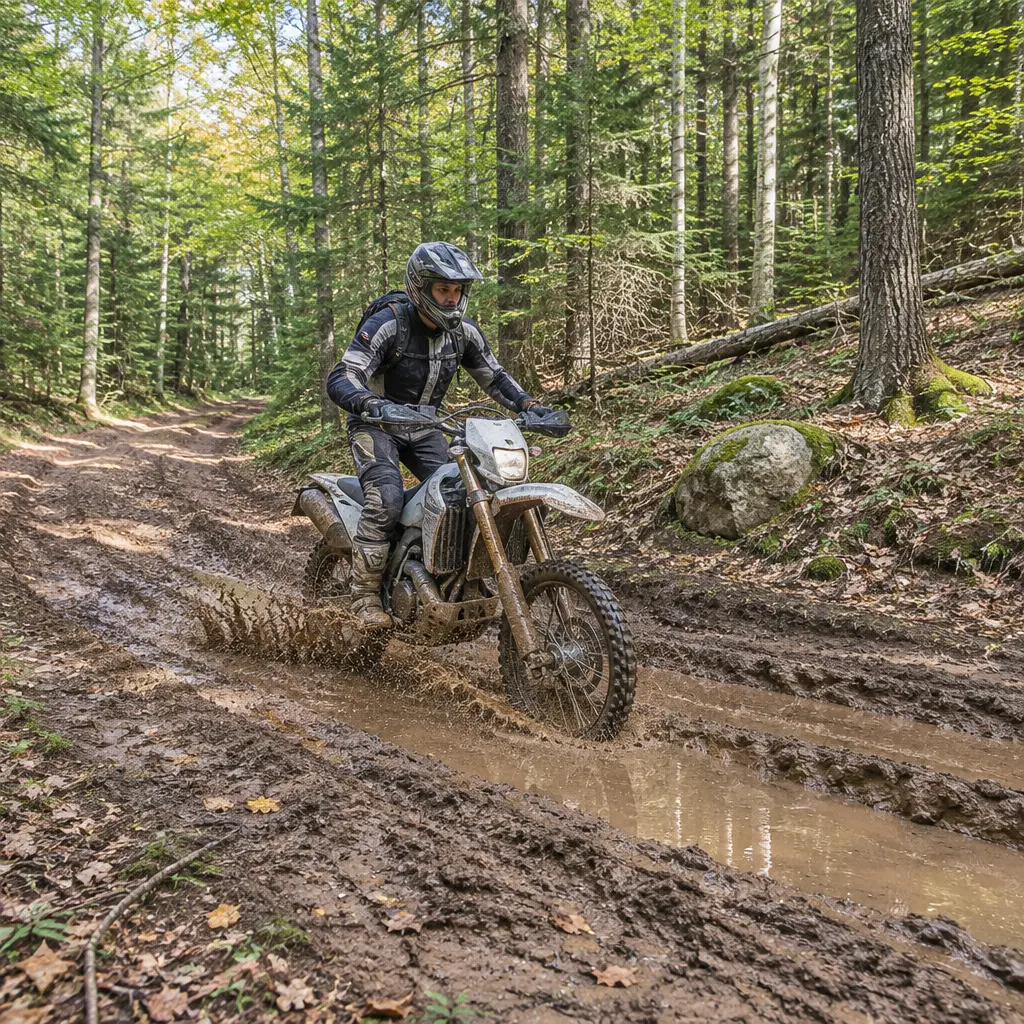
Mud riding is riding a motorcycle or off-highway vehicle across wet, soft ground, where traction can change abruptly. Maintaining momentum through deep ruts means carrying controlled, steady drive while keeping the wheels aligned and avoiding sudden throttle, brake, or steering inputs. The practical approach is to assess the route, choose a suitable gear and line, keep your body relaxed, and make smooth corrections—not to charge blindly. Mud depth, tire choice, vehicle type, and rider skill all affect grip, so there is no single speed or technique that is safe everywhere.
Maintaining momentum is a traction-management technique
Momentum is the vehicle’s continued forward motion; in a rut, useful momentum helps the tires keep rolling rather than stopping and sinking. It is not a substitute for traction. The U.S. National Park Service’s off-highway vehicle guidance emphasizes riding within your ability, staying on designated routes, and avoiding damage to wet trails. Applied to muddy ruts, that means using steady drive only where the surface and route permit it, and stopping or turning back when conditions exceed your control.
The main risks are linked: a sudden throttle surge can spin a tire, wheelspin can excavate the rut and reduce forward progress, and an abrupt correction can send the vehicle into a rut wall or off line. A useful distinction is between shallow, predictable mud and deep, water-filled or bottomless-looking ruts. The latter may conceal rocks, branches, holes, or a firm edge that abruptly changes the vehicle’s direction.
Assess the rut before entering
A rut is a groove worn into the ground by tires or water. Before committing, inspect its depth, width, exit, and likely firmness; check for cross-ruts, hidden obstacles, and a safe place to stop. If you cannot see the bottom or the exit, do not assume the rut is passable. On public or managed trails, follow posted closures and local rules: saturated ground is especially vulnerable to rutting and erosion.
Choose a line and gear that reduce abrupt changes
A line is the route the vehicle’s wheels follow. Where it is safe and legal, choose a smooth, continuous path through the rut rather than repeatedly climbing its sides. Select a gear before entering that allows the engine to pull steadily without frequent shifting. For many vehicles this means a lower gear, but the appropriate choice depends on the machine, gearing, grade, and surface; consult its owner’s manual and practice on manageable ground.
Throttle and steering control limit wheelspin
Throttle control is the gradual application of engine power to maintain drive without overwhelming available grip. Mud varies from slick clay to loose, watery slurry, so tire traction cannot be predicted from appearance alone. The goal is a smooth, consistent throttle input that keeps the wheels turning without producing sustained, uncontrolled spin. If the vehicle begins to dig in, adding more throttle often worsens the problem.
Use smooth, measured throttle
Enter at a controlled pace with the power already set for the terrain, then make small adjustments. Avoid snapping the throttle open, chopping it repeatedly, or changing gears mid-rut if that would interrupt drive. If wheelspin increases, ease off enough to let the tire regain grip while preserving balance and direction. Do not treat a particular speed as universally correct; a narrow rut, steep slope, or unseen obstacle may require a slower approach or a decision not to proceed.
Keep steering inputs small and deliberate
In a deep rut, the rut walls can guide the wheels, but they can also pull the vehicle off line. Hold a relaxed grip and make modest corrections rather than fighting every movement with a sharp countersteer. Look toward the clear route and exit, not directly down at the front wheel. If the front end is being deflected or the rut is too narrow to correct safely, stop when possible and reassess rather than forcing the line.
Body position and vehicle setup support control
Body position is how the rider distributes weight and absorbs movement. It works together with tires, suspension, and drivetrain; it cannot compensate for an unsuitable machine or a route beyond the rider’s ability. Motorcycle and ATV techniques differ, so follow the manufacturer’s instructions and take hands-on training for the specific vehicle.
Stay balanced and let the vehicle move beneath you
On a motorcycle, riders commonly stand when terrain calls for greater mobility, keeping knees and elbows flexed so the body can absorb bumps while the motorcycle tracks beneath them. On an ATV, remain seated or use only the posture recommended for that model and obstacle; standing can affect stability and control. In either case, avoid locking your arms or shifting abruptly. Keep your weight balanced, with adjustments suited to the slope and the vehicle’s handling guidance.
Check tires, controls, and protective equipment
Tire tread and condition influence how a vehicle sheds mud and finds firmer ground, but tire pressure and tire choice should follow the vehicle and tire manufacturer’s recommendations. Do not make an improvised pressure change that risks bead separation or damage. Before riding, inspect tires, brakes, throttle return, steering, and drivetrain, and wear a properly fitted helmet and appropriate protective gear. The U.S. Consumer Product Safety Commission recommends helmets and protective equipment for ATV riders; its safety guidance also stresses training and following the vehicle’s operating instructions.
Recovery and route judgment matter as much as momentum
A successful mud ride includes knowing when not to continue. If progress stops, spinning the tires can deepen the rut, increase the chance of becoming stuck, and damage the trail. Stop applying power, secure the vehicle, and assess the safest recovery option. Do not stand in front of or behind a vehicle under tension, and never use an improvised tow point or recovery method that the manufacturer has not approved.
Recognize when to turn back
Turn back or choose another route if the rut is deeper than the vehicle’s clearance, water obscures hazards, the exit is too steep or slick, the vehicle is repeatedly losing steering, or conditions are damaging the trail. Riding with a partner, carrying communication equipment, and telling someone your route and expected return time can reduce the consequences of a breakdown. The National Park Service advises visitors to use designated routes and respect closures; these measures protect both riders and sensitive terrain.
Recover without making the situation worse
If stuck, shut down or secure the vehicle as its manual directs, then check for hazards and decide whether a safe, approved recovery is possible. Clear loose mud only when doing so is safe and permitted, and use rated recovery equipment attached to approved points. If the vehicle is heavily bogged, damaged, or on unstable ground, call for assistance rather than risking injury. The safest recovery is often preventing the vehicle from becoming stuck through careful route choice.
Conclusion: steady control beats brute force
Maintaining momentum through deep ruts is a coordinated practice: inspect the route, choose a manageable line and gear, use smooth throttle, steer with small corrections, and keep a balanced posture appropriate to the vehicle. Tire condition and rider training matter, but neither makes an unsafe rut safe. Avoid sustained wheelspin, respect trail closures and wet-ground conditions, and turn back when the route exceeds your visibility, clearance, or control. For further preparation, read your owner’s manual, consult local land-manager rules, and consider practical off-highway vehicle training before tackling difficult mud.
Sources: National Park Service, Off-Road Vehicle Use, https://www.nps.gov/subjects/nnlandmarks/off-road-vehicle-use.htm; U.S. Consumer Product Safety Commission, All-Terrain Vehicle Safety, https://www.cpsc.gov/Safety-Education/Safety-Education-Centers/ATV-Safety-Information-Center; U.S. Forest Service, Off-Highway Vehicle Recreation, https://www.fs.usda.gov/visit/know-before-you-go/off-highway-vehicle-recreation