
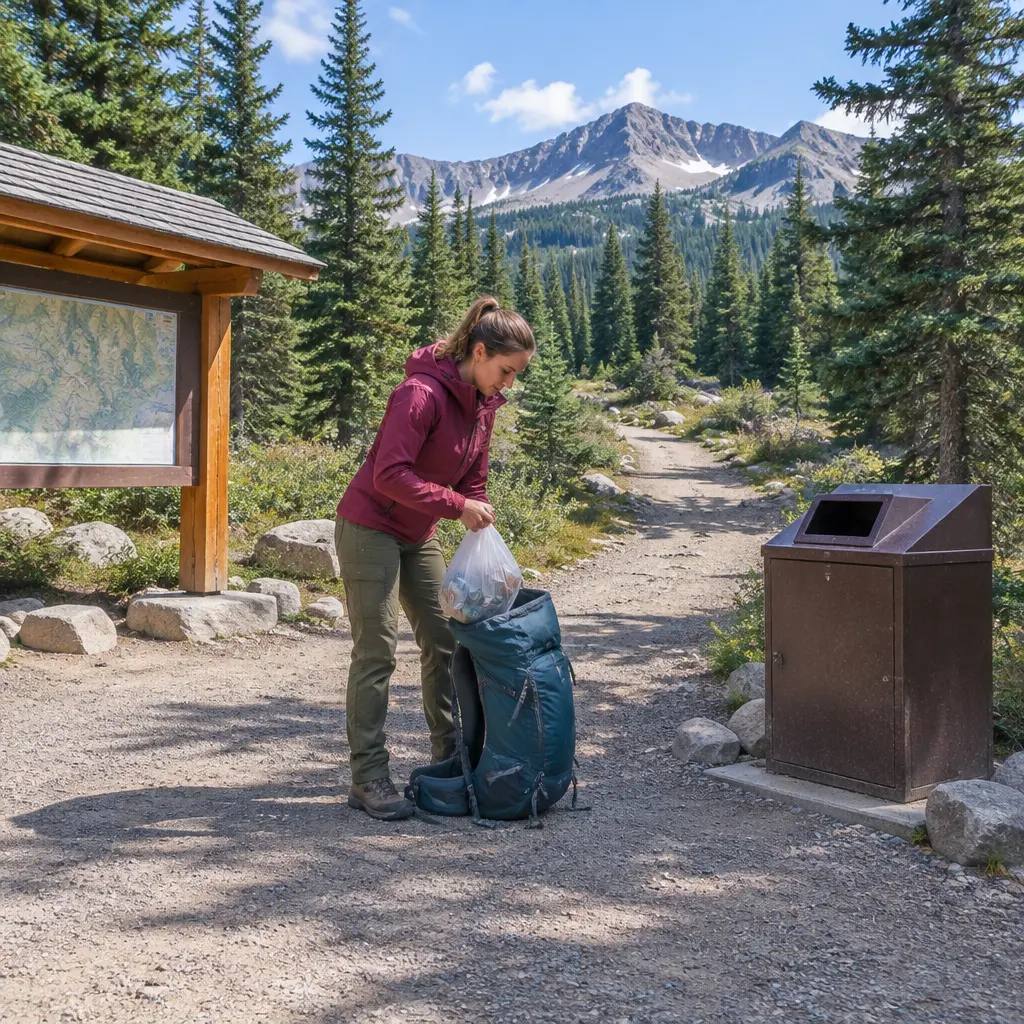
Land stewardship practices are the choices people make to care for land and natural resources over time. Packing out waste—carrying out everything brought in, including food scraps and hygiene products—is a practical stewardship practice that reduces pollution, protects wildlife, and helps keep trails and campsites usable. The need is substantial: the National Park Service reports that more than 325 million people visited U.S. national parks in 2023, and even small amounts of litter can accumulate across heavily used places. By understanding the leave-no-trace principle, applying site-specific waste methods, and respecting access rules, visitors can help preserve both the land and the public’s ability to enjoy it.
Packing Out Waste as a Land Stewardship Practice
Land stewardship is the responsible care and use of land, water, and wildlife so ecological health and human benefits can endure. The U.S. Department of Agriculture’s Natural Resources Conservation Service describes conservation stewardship as managing and maintaining natural resources through informed practices. In outdoor recreation, packing out waste is one concrete way visitors put that responsibility into action: whatever cannot be properly disposed of at the site is carried to an approved waste facility.
“Waste” includes more than visible packaging. It can include food leftovers, fruit peels, cigarette butts, pet waste, used tissues, and human waste where site rules require removal. These materials differ in how they break down, but none should be assumed harmless simply because it is biodegradable. Decomposition can take longer in cold, dry, or high-elevation environments, and exposed food can attract wildlife or alter animal behavior.
The Leave No Trace Center for Outdoor Ethics organizes low-impact recreation around seven principles, including “Dispose of Waste Properly” and “Leave What You Find.” Together, these principles connect individual choices to broader stewardship goals: prevent contamination, avoid habituating wildlife, protect the experience of other visitors, and reduce the burden on land managers.
Why Carrying Waste Out Matters
Packing out waste prevents litter from entering streams, soils, and wildlife habitat. Food scraps may draw animals toward campsites and roads, while plastic and fishing line can entangle or be swallowed by wildlife. Waste also affects people: an unsanitary campsite or trail can diminish recreation quality and require staff or volunteers to spend time on cleanup rather than maintenance and resource protection.
Scale makes prevention important. The National Park Service counted 325,498,646 recreation visits in 2023. That figure covers visits, not individual litter events, but it illustrates how repeated small impacts can matter in popular landscapes. Visitor volume varies by place and season, so the appropriate waste plan should follow local guidance rather than assume every area has the same facilities or ecological conditions.
Waste Packing as a Leave No Trace Hyponym
Packing out waste is a specific practice within the broader Leave No Trace principle of disposing of waste properly. Related practices include packing out litter, using designated toilets, carrying human waste where required, and washing dishes or disposing of wastewater only as local rules permit. The exact method changes with the setting: a developed campground may provide bins, while a remote route may require visitors to carry all refuse to a trailhead.
This distinction matters because “pack it in, pack it out” is not a substitute for reading site regulations. Some locations provide approved toilets or bear-resistant containers; others require a portable waste system. Follow posted instructions and agency guidance, and do not leave bags beside overflowing bins unless signs explicitly direct visitors to do so.
Packing Out Waste Preserves Future Access Rights
Future access depends on more than a visitor’s legal permission to enter. It also depends on landowners, agencies, and communities being willing and able to keep routes open, facilities maintained, and ecological impacts within acceptable limits. Packing out waste supports that social and practical foundation by helping prevent degradation and demonstrating that visitors can use places responsibly.
Access rules are site-specific and can change. A private landowner may grant permission subject to conditions; a public agency may close a route temporarily for safety, habitat protection, or maintenance. Responsible waste management does not create a legal right of access, but it helps uphold the conditions and relationships on which continued access can depend.
The Connection Between Stewardship and Continued Access
A clean, low-impact site is easier to manage and more welcoming to the next visitor. Conversely, persistent litter can contribute to sanitation problems, wildlife conflicts, complaints, or restrictions. These outcomes are not automatic, and closures may have many causes, but preventing avoidable impacts reduces one source of pressure on recreation areas and the people responsible for them.
The principle applies across ownership types. On public land, visitors should follow agency rules and use designated disposal facilities. On private land, they should honor the permission granted, leave gates and property as instructed, and carry out waste unless the host explicitly provides another disposal method.
Wildlife, Water, and Visitor Experience
Waste can affect wildlife directly through ingestion or entanglement and indirectly by drawing animals into human-use areas. The National Park Service’s wildlife guidance emphasizes that feeding wildlife can make animals dependent on human food and increase dangerous encounters. Securing food and packing out scraps help avoid reinforcing those behaviors.
Water protection requires particular care. Do not put trash, food, soap, or wastewater into lakes, streams, or wetlands. The Leave No Trace Center advises visitors to wash dishes well away from water sources and scatter strained wastewater where permitted; local rules may be stricter. In fragile or regulated areas, carry wastewater out or use designated facilities as directed.
Practical Waste-Packout Methods for Different Activities
Good waste management begins before departure. Visitors can reduce the amount they must carry by choosing reusable items, removing excess packaging at home, and planning a secure way to store refuse. The U.S. Environmental Protection Agency’s waste hierarchy gives priority to reducing and reusing materials before recycling or disposal; outdoors, that means preventing waste first and packing out what remains.
Day Hikes and Short Visits
For day trips, bring a small, sealable bag dedicated to trash. Keep food wrappers, tissues, and other refuse together, and check rest stops and picnic areas before leaving. If a bin is available, use it only as intended; if it is full, follow posted instructions or carry the waste to another approved facility rather than placing it beside the container.
Camping and Backcountry Travel
For overnight trips, separate food waste from other trash when doing so helps meet local wildlife-storage requirements. Use bear-resistant storage or other approved systems where required, and keep waste secured rather than leaving it outside a tent or vehicle. In backcountry areas, pack out all refuse and inspect the campsite before departure, including fire rings and cooking areas.
Human-waste rules vary substantially. Some sites require visitors to use toilets or pack-out systems; others permit burial in specified locations and conditions. Check current land-manager guidance before traveling. Where a pack-out system is required, use the approved product and disposal point, and never leave a sealed bag on the trail or in an ordinary restroom unless instructions say to do so.
Boating, Angling, and Pet Recreation
Boaters should secure litter against wind and waves and bring it ashore for disposal. Anglers should collect fishing line, hooks, bait containers, and packaging; abandoned line can entangle wildlife. People recreating with dogs should bag pet waste and dispose of it in an approved receptacle or carry it out, since leaving bags along a trail creates litter rather than solving the problem.
Barriers, Examples, and Better Stewardship Systems
Visitors may encounter overflowing bins, confusing rules, long distances to disposal sites, or uncertainty about compostable packaging. These challenges call for preparation and clear communication, not assumptions that waste will disappear. Compostable products should be treated as trash unless a site specifically accepts them; many require controlled conditions that natural environments do not provide.
A Practical Trailhead Example
Before a multi-day hike, a group checks the land manager’s current rules, repackages meals to reduce wrappers, and brings sealable waste bags. On the route, the group keeps food waste secured and carries all packaging out. At the trailhead, it uses the designated receptacle—or takes the waste to the next approved facility if the receptacle is full. This simple sequence prevents roadside dumping, reduces wildlife attraction, and leaves the site ready for subsequent users.
How Land Managers and Visitors Can Improve Outcomes
Land managers can support pack-out behavior with clear signs, current online guidance, accessible disposal points, and volunteer education. Visitors can help by reporting damaged or overflowing facilities through official channels, joining organized cleanups, and sharing accurate site-specific information. Cleanup efforts are valuable, but prevention remains preferable because removing waste after it spreads can be difficult and costly.
A simple visual for a stewardship handout could compare “waste brought in” with “waste carried out” across a trip, showing how a small reusable pack-out bag prevents litter from being left at campsites, waterways, and trailheads. The illustration should distinguish ordinary refuse from human waste, which may have separate rules and handling requirements.
Conclusion: Pack Out Waste to Keep Places Usable
Packing out waste turns land stewardship into a practical daily habit. It supports Leave No Trace principles, reduces risks to wildlife and water, improves the experience of other visitors, and helps land managers care for heavily used places. With more than 325 million U.S. national park recreation visits recorded in 2023, consistent low-impact choices matter across a vast range of landscapes.
Before your next outing, check the current rules, minimize packaging, bring a secure waste bag, and carry refuse to an approved disposal point. These actions do not guarantee future access, but they show respect for the land and for the people and institutions that make responsible recreation possible.
Sources: National Park Service, “Annual Visitation Highlights,” 2023, https://www.nps.gov/subjects/socialscience/annual-visitation-highlights.htm; Leave No Trace Center for Outdoor Ethics, “The 7 Principles,” https://lnt.org/why/7-principles/; U.S. Department of Agriculture, Natural Resources Conservation Service, “Conservation Stewardship Program,” https://www.nrcs.usda.gov/programs-initiatives/csp-conservation-stewardship-program; National Park Service, “Keep Wildlife Wild,” https://www.nps.gov/subjects/watchingwildlife/keep-wildlife-wild.htm; U.S. Environmental Protection Agency, “Sustainable Materials Management: Non-Hazardous Materials and Waste Management Hierarchy,” https://www.epa.gov/smm/sustainable-materials-management-non-hazardous-materials-and-waste-management-hierarchy.


