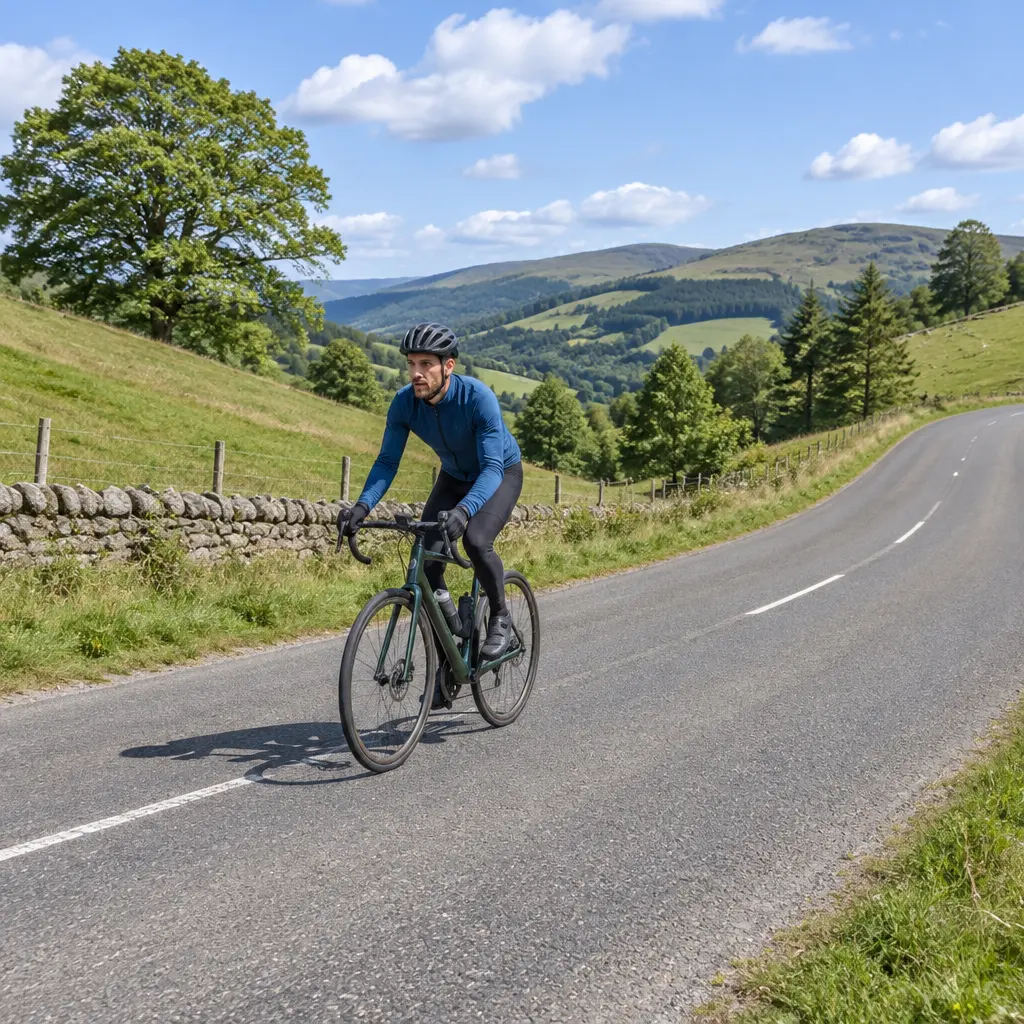
Hill climbing is the practice of riding a bicycle uphill while keeping the drivetrain engaged and maintaining enough confidence to make steady progress. The technique that best preserves both is controlled pacing: choose a sustainable gear before the slope steepens, keep pressure on the pedals without surging, and shift your position or cadence to suit the gradient. Cycling guidance from British Cycling and training research on pacing both support managing effort rather than starting too hard; that matters because a steep climb can quickly turn a small pacing mistake into loss of momentum, muscular fatigue, or an unsafe stop. The sections below explain the technique, its gearing and body-position components, ways to build confidence, and a practical example for putting them together.
Controlled Pacing Defines the Hill-Climbing Technique
A hill-climbing technique that preserves clutch and confidence is a repeatable way to maintain smooth pedal force, suitable cadence, traction, and balance while ascending. Here, “clutch” means the rider’s ability to keep the bicycle moving under control and the drivetrain engaged—not a mechanical clutch found on a motorcycle. The central principle is to regulate effort so the rider can continue turning the pedals instead of exhausting themselves in a short burst.
British Cycling’s general climbing guidance emphasizes pacing, choosing an appropriate gear, and staying relaxed. These recommendations align with exercise research: a 2012 review by Robert Tucker noted that pacing strategies help athletes regulate effort in response to task demands. A climb is not a fixed-distance laboratory test, but the practical lesson transfers: begin at an effort you can sustain, then adjust as the slope and remaining distance become clear.
The technique includes several related approaches, or hyponyms: seated climbing, standing climbing, low-gear spinning, and short power efforts over brief ramps. They are not competing rules. A rider can use a seated rhythm for most of a hill, stand briefly to change muscle recruitment or clear a steep section, and return to sitting before fatigue disrupts control.
Sustainable Effort and Cadence
Cadence is the number of pedal revolutions per minute. A sustainable cadence is one that lets the rider maintain smooth circles without forcing each stroke or bouncing in the saddle. There is no single ideal cadence for every rider: fitness, gearing, gradient, bicycle type, and personal comfort all matter. Instead of chasing a universal number, use breathing and pedal smoothness as feedback. If each stroke becomes a grind, shift to an easier gear when safe; if the legs spin without useful pressure, select a slightly harder gear.
The key is to avoid abrupt effort spikes. On a long ascent, use a conversational or controlled breathing effort early, saving harder work for a short final section if energy and conditions allow. This protects confidence as well as physical reserves: the rider can see continued progress and is less likely to panic when the gradient increases.
Seated and Standing Climbing
Seated climbing keeps the rider’s weight supported by the saddle and generally makes it easier to maintain an even effort over a sustained hill. Keep the upper body relaxed, hands secure, and hips stable. Standing can help on a short steep ramp, when changing position relieves discomfort, or when a brief increase in power is needed. However, standing often raises effort and can make the rear wheel more prone to slipping on loose or wet ground if the rider pulls too hard.
A practical transition is to shift to an easier gear before standing, rise smoothly, and keep pedal pressure controlled. Sit again before the effort becomes ragged. The aim is not to remain in one posture at all costs; it is to change position without interrupting momentum or destabilizing the bicycle.
Gearing and Drivetrain Management Preserve Climbing Momentum
Gearing changes how much force the rider must apply to turn the pedals. A lower gear makes pedaling easier but reduces distance traveled per pedal revolution; a higher gear makes each revolution cover more ground but requires greater force. On a climb, selecting a low enough gear before the slope becomes severe helps maintain cadence and reduces the chance of stalling.
Shimano’s bicycle-maintenance guidance advises riders to ease pedal pressure while shifting to reduce strain on the chain and drivetrain. That is especially useful uphill: shift before the legs are under maximum load, briefly soften the force, and resume steady pedaling once the gear engages. Avoid cross-chaining where possible—for example, pairing the largest front chainring with the largest rear sprocket—because extreme chain angles can increase wear and noise.
Anticipatory Shifting
Anticipatory shifting means selecting the next easier gear before the climb becomes too steep to shift smoothly. Scan the road or trail ahead, identify the change in gradient, and make small shifts while the pedals still turn with moderate pressure. If the bicycle has electronic or internally geared shifting, follow the manufacturer’s instructions; shifting behavior and allowable load vary by system.
If a rider waits until cadence has collapsed, a shift may feel rough or fail to engage cleanly. The rider may then lose speed and confidence at the same time. A well-timed shift is therefore both a mechanical habit and a pacing tool.
Traction, Balance, and Smooth Pedal Force
Traction is the grip between the tires and riding surface. On loose gravel, mud, wet pavement, or steep singletrack, smooth force helps the tire remain planted. Keep the bicycle moving steadily, avoid sudden stomps on the pedals, and use a stable line that leaves room for hazards. On a mountain bike, a slightly rearward position can help maintain rear-wheel grip, but leaning too far back may make steering difficult; adjust gradually rather than adopting a rigid posture.
On paved climbs, the main balance challenge may be holding a straight line at low speed. Look ahead rather than down at the front wheel, keep your hands relaxed, and avoid weaving into traffic or across the full road. If you need to stop, choose a safe, visible place and consider the surface before unclipping or putting a foot down.
Confidence Comes from Preparation and Manageable Progress
Climbing confidence is the expectation that you can respond to the hill’s demands without losing control. It develops through preparation and experience, not simply through positive thinking. Choosing a route suited to current fitness, checking the bicycle, and practicing on shorter climbs gives the rider useful evidence of what works.
The Centers for Disease Control and Prevention recommends that adults accumulate at least 150 minutes of moderate-intensity aerobic activity per week, along with muscle-strengthening activity on two days. This is a broad health guideline, not a cycling-climb prescription. It nevertheless supports a sensible foundation: regular activity can help build general endurance, while gradual, cycling-specific practice develops the skills and conditioning required for hills.
Progressive Practice
Progressive practice means increasing difficulty in manageable steps. Start with a short, gentle hill and focus on relaxed breathing, early shifting, and a steady cadence. Repeat the climb when recovered, then gradually add duration or gradient. Change one main challenge at a time—such as hill length, steepness, or effort—so it is easier to identify what needs improvement.
For a simple self-check, record the route, approximate climb duration, perceived effort, and any point where cadence or confidence faltered. These notes can show progress even when speed varies with wind, temperature, traffic, or surface. A faster time is not the only sign of improvement; smoother shifting and finishing with energy in reserve also count.
Equipment, Route Choice, and Safety
A bicycle that shifts reliably and has properly inflated tires makes climbing more predictable. Before riding, check the brakes, tires, chain, and drivetrain; use tire pressure appropriate to the tire, terrain, load, and manufacturer guidance rather than relying on a single universal pressure. Carry water and any repair essentials suited to the route, and check weather and surface conditions.
For road riding, follow local traffic rules and use lights or visible clothing when conditions warrant. For trail riding, choose a line within your ability and yield according to local trail etiquette. If a climb is beyond your current capacity, dismounting and walking is a legitimate safety decision—not a failure. Confidence is preserved by making controlled choices, including choosing not to continue riding a section.
A Practical Climb Combines Pacing, Shifting, and Posture
Consider a rider approaching a hill that begins gently and steepens near the top. The rider checks the route, shifts down before the steeper section, and starts at a controlled effort. As the gradient rises, they maintain smooth pedal pressure while seated. Near a short ramp, they briefly stand in an easier gear, keeping the bicycle stable, then sit again after the ramp. If breathing becomes uncontrolled or traction deteriorates, they reduce effort or stop in a safe place rather than forcing the climb.
The sequence can be summarized as preparation, anticipation, controlled effort, and reassessment. It is more reliable than trying to overpower the hill from its base. The rider finishes with a technique they can repeat and a clearer understanding of how their bicycle and body respond.
Conclusion: Preserve Momentum Without Spending Confidence
A hill-climbing technique that preserves clutch and confidence relies on sustainable pacing, early gear changes, smooth pedal force, and deliberate use of seated and standing positions. Gearing supports cadence; traction and balance support control; progressive practice builds skill and fitness. Together, these choices reduce the likelihood that a climb will become a struggle caused by avoidable surges or late shifts.
Start with a manageable hill, practice one technique at a time, and review how the effort felt rather than judging success by speed alone. For further guidance, consult a qualified cycling coach or a reputable bicycle mechanic, and use the current advice from public-health and cycling organizations to match training and equipment decisions to your needs.
Sources: British Cycling, How to Climb on a Bike, https://www.britishcycling.org.uk/knowledge/article/izn20160118-How-to-climb-on-a-bike-0; Tucker, Robert, The Anticipation, Achievement, and Regulation of Exercise Performance: A Review of the Psychophysiological Basis of Pacing, https://doi.org/10.2165/11593140-000000000-00000; Shimano, Bicycle User Manuals and Technical Documentation, https://si.shimano.com/; Centers for Disease Control and Prevention, Adult Activity: An Overview, https://www.cdc.gov/physical-activity-basics/guidelines/adults.html