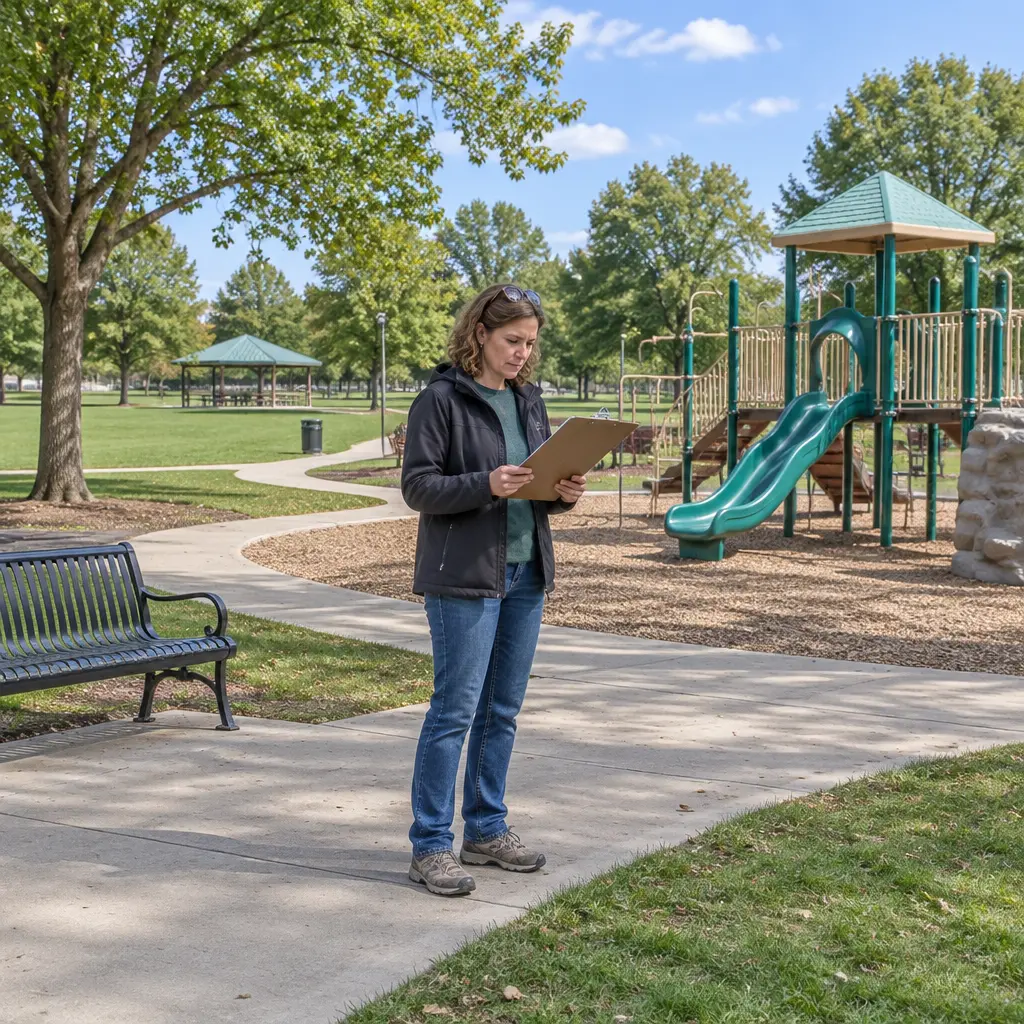
A park liability waiver is a contract in which a visitor agrees, in specified circumstances, not to hold a park operator responsible for certain injuries. Its effect depends on the wording, the activity, the facts of an incident, and the law where the park operates; signing does not automatically erase every legal right. Understanding what a waiver covers, how courts assess it, and what practical steps to take before and after an incident can help visitors make informed choices. The stakes are real: the U.S. Consumer Product Safety Commission’s National Electronic Injury Surveillance System estimates that emergency departments treat hundreds of thousands of playground-related injuries among children each year, though those figures do not determine who is legally responsible.
How Park Liability Waivers Define Assumed Risk
A liability waiver—often called a release, exculpatory agreement, or assumption-of-risk form—is language intended to limit or relinquish a participant’s right to sue for specified harm. Cornell Law School’s Legal Information Institute describes an exculpatory clause as a contractual provision that relieves a party from liability for specified conduct. In parks, that may mean a visitor accepts ordinary risks associated with an activity, such as falling while climbing or colliding with another participant.
A waiver is not a universal permission slip for unsafe conduct. Courts commonly examine whether the terms are clear, whether the visitor had meaningful notice, whether the activity and risk are identified, and whether enforcement would conflict with public policy or a statute. State rules vary considerably, and a court may interpret ambiguity against the organization that drafted the form.
Express waivers and releases
An express waiver is a written or, in some settings, electronic agreement in which a participant acknowledges risks and releases specified claims. Stronger forms identify the covered activity, explain foreseeable hazards, name the parties protected, and use conspicuous language. A broad statement such as “assume all risks” may not clearly communicate that a visitor is giving up claims based on the operator’s negligence; whether it does so depends on the jurisdiction and the form’s wording.
Assumption of risk and inherent hazards
Assumption of risk describes a participant’s awareness and acceptance of particular dangers. Some risks are inherent in an activity—for example, losing balance on a climbing structure—while others may result from a hazard the operator could reasonably have prevented, such as a broken handrail left unrepaired. A waiver may address some inherent risks, but it does not necessarily settle whether a danger was inherent, disclosed, or avoidable. Those distinctions often become central in a claim.
Indemnity and parent-signed forms
An indemnity clause is different from a release: it may require one party to reimburse another for certain losses or legal costs. Visitors should check whether a form contains this additional obligation. For minors, a parent’s signature does not have the same effect everywhere. State laws and court decisions differ on whether a parent can waive a child’s future personal-injury claim, so families should not assume that a signature is automatically enforceable or automatically invalid.
How Courts Evaluate Park Waiver Enforceability
Enforceability is a legal question, not a conclusion created simply by placing a signature line on a form. Courts may consider contract formation, the clarity and scope of the release, the relationship between the parties, the public interest, and any applicable statutes. The facts matter: a waiver for a voluntary ropes course may be treated differently from a notice required to enter an ordinary public park.
Clarity, notice, and scope
A visitor generally needs a fair opportunity to see and understand the relevant terms. Courts may scrutinize fine print, confusing language, hidden online checkboxes, or forms presented only after payment. They also compare the injury with the risks the agreement actually describes. A release for a guided kayaking trip, for instance, may not clearly cover an unrelated injury caused by a defective entrance gate.
Negligence, gross negligence, and intentional misconduct
Ordinary negligence generally refers to a failure to use reasonable care. Gross negligence usually describes a more serious departure from reasonable care, though its precise legal definition varies by state. Many jurisdictions restrict or reject attempts to waive liability for gross negligence, reckless conduct, or intentional wrongdoing. A waiver therefore should not be read as proof that an operator can disregard maintenance, safety rules, or applicable legal duties.
Public parks, private parks, and state-law variation
The operator’s identity matters. A private amusement or adventure park may use an activity-specific contract, while a municipal or state park may be governed by statutes addressing government liability, notice deadlines, or recreational use. The federal Recreational Use Statute, 16 U.S.C. §§ 460l-8 through 460l-11, encourages public access to certain lands by limiting liability in defined circumstances, but it does not create one blanket rule for every park or injury. State recreational-use statutes and exceptions must also be checked.
How Visitors Can Review a Waiver Before Participating
Reading a waiver before arrival gives visitors time to ask questions or choose another activity. A signature may be evidence that terms were accepted, but it does not prove that every term is valid or that every risk was adequately explained. The following review points can help identify what the form is asking a visitor to accept.
Identify the activity, hazards, and protected parties
Check whether the document names the specific activity and describes its foreseeable hazards. Look for the parties covered—such as the park, landowner, contractors, instructors, or equipment providers—and note whether the release applies to one visit or future participation. Ask the operator to clarify broad phrases that appear to cover unrelated activities or unknown risks.
Check electronic signing and recordkeeping
For an online form, save or download the complete agreement, including linked terms and the date of acceptance. Confirm that the participant’s name and selected activity are accurate and that the form was visible before payment or participation. If a parent signs, determine whether the form addresses the child, the parent, or both; those distinctions can matter legally.
Compare the waiver with safety practices
A waiver cannot tell visitors whether equipment is currently safe. Check posted instructions, required protective equipment, staff supervision, weather closures, and visible maintenance concerns. The U.S. Consumer Product Safety Commission’s Public Playground Safety Handbook provides safety guidance for playground design and inspection; it is guidance, not a substitute for local codes or a legal determination about a particular injury.
What to Do After an Injury at a Park
After an injury, prioritize medical care and preserve accurate information. A signed waiver does not prevent a visitor from documenting an incident, reporting a hazard, or seeking legal advice. Acting promptly matters because evidence can disappear and legal notice periods may be short—especially when a government entity is involved.
Document the scene and report the incident
Record the date, time, location, activity, and sequence of events while details are fresh. Photograph the area, equipment, warning signs, and any visible hazard when it is safe to do so. Obtain contact information from witnesses, request a copy or reference number for the park’s incident report, and keep relevant receipts and medical records. Avoid altering or discarding the original waiver or related messages.
Preserve deadlines and get jurisdiction-specific advice
Deadlines for personal-injury claims, written notice, and claims against public bodies differ by jurisdiction. Do not assume that the ordinary lawsuit deadline is the only deadline. A lawyer licensed where the injury occurred can review the waiver, the park’s legal status, applicable safety duties, and the relevant filing requirements. This is particularly important for serious injuries, injuries to minors, and incidents involving public agencies.
Conclusion: Make an Informed Choice About Park Waivers
Park liability waivers are contracts that may allocate particular risks, but their scope and enforceability depend on clear wording, the circumstances of signing, the nature of the activity, and local law. Visitors should distinguish express releases from assumption-of-risk and indemnity terms, check how negligence and minors are treated, and assess the park’s real-world safety practices rather than relying on the form alone. Read and save the agreement before participating; after an injury, seek care, document what happened, and check jurisdiction-specific deadlines. For a significant injury or a government-operated park, consult a qualified local attorney.
Sources: Cornell Law School Legal Information Institute, “Exculpatory Clause,” https://www.law.cornell.edu/wex/exculpatory_clause; U.S. Consumer Product Safety Commission, “National Electronic Injury Surveillance System (NEISS),” https://www.cpsc.gov/Research–Statistics/NEISS-Injury-Data; U.S. Consumer Product Safety Commission, Public Playground Safety Handbook, https://www.cpsc.gov/s3fs-public/325.pdf; United States Code, 16 U.S.C. §§ 460l-8 through 460l-11, Recreational Use Statute, https://uscode.house.gov/view.xhtml?path=/prelim@title16/chapter1/subchapter54&edition=prelim