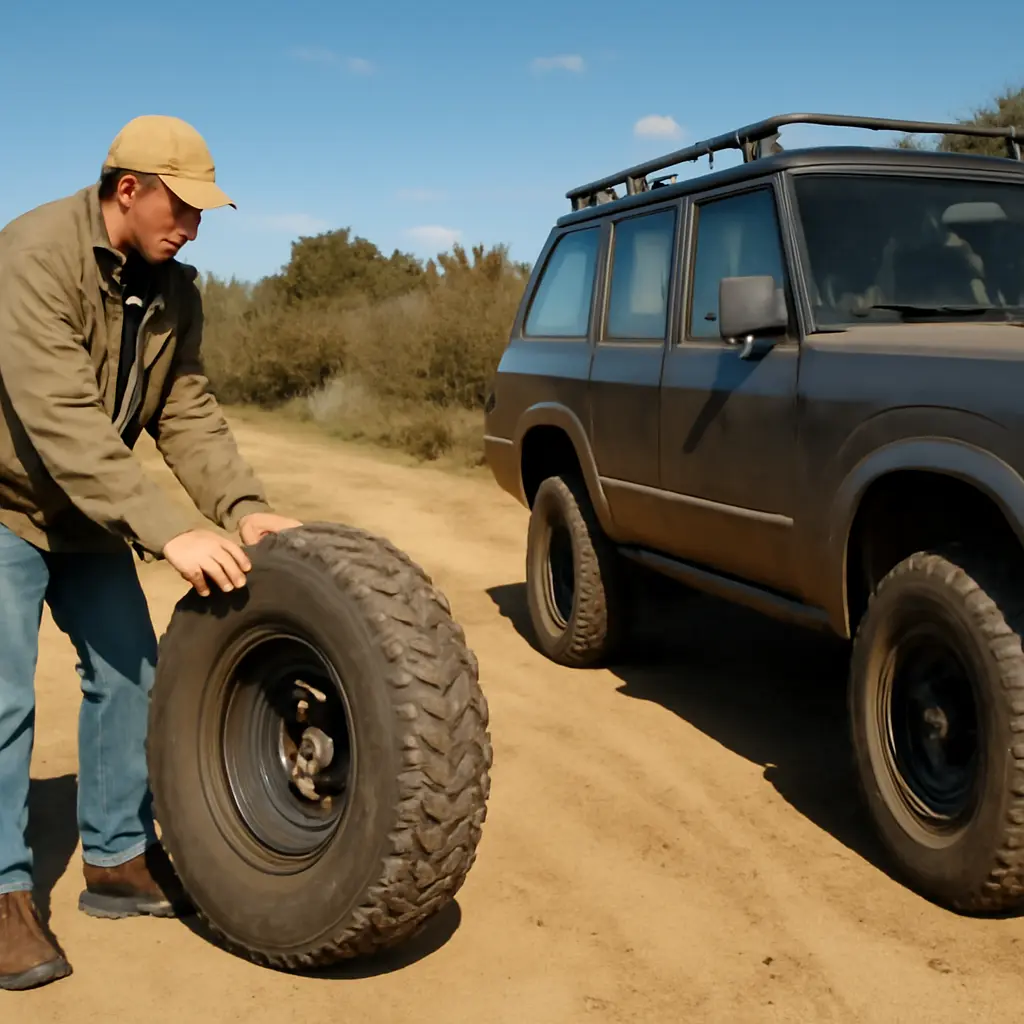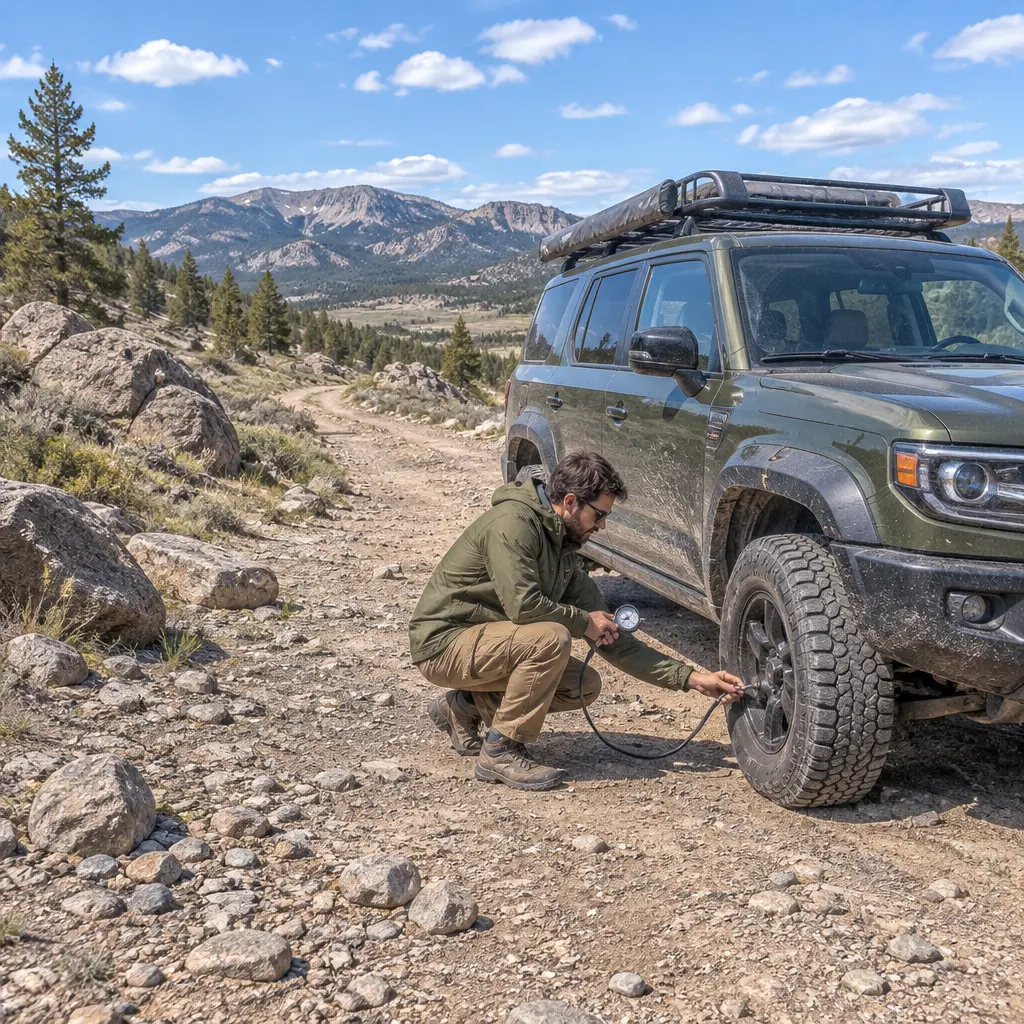
Tire pressure optimization is the practice of setting inflation to suit a vehicle, tire, load, speed, and surface—not choosing one PSI for every situation. For rock crawling, a carefully reduced pressure can enlarge the tire’s footprint and help it conform to rocks; for high-speed driving, the appropriate pressure is the vehicle or tire manufacturer’s specified cold pressure, not an arbitrary increase or decrease. The right setting depends on equipment and conditions, and there is no universally safe rock-crawling PSI. Because underinflation can promote heat buildup and tire damage at speed, pressure changes should be treated as terrain-specific adjustments, followed by reinflation before highway travel.
Tire pressure defines traction and load support
Tire pressure, measured in pounds per square inch (PSI), is the air pressure inside a tire. The National Highway Traffic Safety Administration (NHTSA) distinguishes the vehicle manufacturer’s recommended cold inflation pressure—listed on the driver-side door placard or in the owner’s manual—from the maximum pressure printed on the tire sidewall. The placard value is the starting point for normal road use; the sidewall figure is not a universal recommended setting.
Pressure affects how a tire carries its load, flexes, heats, and contacts the ground. Lowering pressure can lengthen and widen the contact patch, which may improve grip on uneven rock. But excessive deflation increases sidewall flex and the chance of bead unseating, sidewall pinching, rim damage, or tire failure. Conversely, raising pressure beyond the vehicle specification does not automatically improve high-speed safety or handling. NHTSA advises checking tires when cold, before driving or after the vehicle has been parked for at least three hours, because driving warms the air and raises the reading.
Rock-crawling tire pressure increases conformity and traction
Rock-crawling pressure is a deliberately reduced, off-road setting intended to let a suitable tire deform around rocks and irregular surfaces. This deformation can increase the usable contact area and help the tread maintain contact over obstacles. It is not a precise pressure category with one number that fits every vehicle: tire construction, wheel diameter, load, bead retention, terrain, and driving technique all matter.
Contact patch, grip, and obstacle climbing
The contact patch is the portion of tread touching the ground. At reduced pressure, a tire generally becomes more compliant, helping it wrap around rocks rather than bridge over every irregularity. That can support traction at low speeds, where controlled tire placement and gentle throttle are more important than high-speed stability. The benefit has limits: too little pressure may allow the tire to fold, slip on the rim, or expose its sidewall to sharp edges.
A practical example is a loaded four-wheel-drive vehicle climbing a rocky trail. A driver may lower pressure in measured steps, then test steering response and inspect the tire and wheel before proceeding. The appropriate setting must be established for that specific tire-and-wheel combination; a pressure used successfully by another vehicle is not proof that it is safe for yours.
Bead retention, sidewall protection, and load
Bead retention describes how securely the tire bead stays seated against the wheel. Lower pressure reduces the margin against unseating, particularly during side loads, sharp turns, or impacts. A beadlock wheel is designed to clamp the tire bead, but it does not eliminate the risks of sidewall cuts, wheel damage, excessive deflection, or incorrect pressure for the vehicle’s load.
Before reducing pressure, account for passengers, cargo, roof loads, axle loading, and the tire maker’s guidance. Use a reliable gauge and an air source that can restore road pressure. Stop and reassess if the tire burps air, shifts on the rim, shows damage, or feels unstable. No single low-pressure figure is safe to recommend without those details.
High-speed tire pressure prioritizes heat control and stability
High-speed tire pressure is the cold inflation setting appropriate to the vehicle, tire, load, and intended operating conditions. For ordinary road driving, begin with the vehicle placard or owner’s manual rather than the tire sidewall maximum. At speed, underinflation can increase tire flex and heat generation; excess heat can contribute to premature wear or tire failure. Overinflation can also reduce the tread’s effective contact and make the ride harsher, so simply adding PSI is not a reliable safety strategy.
Cold-pressure checks and load adjustments
Cold pressure means the tire has not been warmed by recent driving or strong direct sunlight. NHTSA recommends using the placard or manual and checking pressure monthly and before long trips. Tire pressure monitoring systems (TPMS) are useful warnings, but they do not replace a gauge: many systems alert only after pressure has fallen substantially, and they may not identify gradual pressure loss early enough for routine maintenance.
When a vehicle carries a heavy load or is used for sustained high-speed operation, follow the vehicle and tire manufacturers’ specific instructions. Do not bleed air from a warm tire simply to return it to its cold-pressure number; the increase after driving is expected. Recheck when the tires have cooled, and use the specified cold target.
Handling, wear, and failure risk
Correct inflation helps the tire maintain its designed shape and supports predictable braking, cornering, and load capacity. Underinflation can cause excess shoulder wear and heat, while overinflation can contribute to center wear and a smaller or less even contact area. Wear patterns are clues, not definitive diagnoses: alignment, suspension condition, rotation history, and driving style can produce similar symptoms.
For highway travel after an off-road outing, restore the prescribed cold road pressure before driving at speed. If the tires are warm, use the vehicle’s recommended procedure rather than guessing or immediately bleeding them down. Inspect for cuts, bulges, embedded objects, bead leaks, and rim damage; a damaged tire should be assessed by a qualified tire professional.
A terrain-specific pressure routine reduces risk
A safe pressure plan treats trail settings and road settings as separate operating modes. The following process helps make the transition deliberate:
- Record the vehicle’s placard pressure and consult the owner’s manual and tire manufacturer’s guidance.
- Check and record cold pressure with a dependable gauge before leaving for the trail.
- For rock crawling, reduce pressure cautiously in small steps, considering load, tire construction, wheel type, and obstacle severity; test handling and inspect for bead or sidewall problems.
- Carry a gauge and a suitable compressor, and avoid high-speed driving on the reduced off-road setting.
- Before returning to pavement, reinflate to the correct road setting and check all tires, including the spare.
- After the tires cool, verify cold pressure again and inspect for damage or unusual wear.
A simple comparison chart can help communicate the distinction: rock crawling calls for cautious, equipment-specific pressure reduction at low speed; public-road and high-speed driving call for the vehicle’s specified cold pressure. Neither mode is defined by a universal PSI value.
Conclusion: match tire pressure to the operating mode
Rock-crawling tire pressure is a controlled reduction that can improve tire conformity and traction, but it also narrows the safety margin against bead loss, sidewall damage, and wheel impacts. High-speed tire pressure should follow the vehicle and tire manufacturers’ cold-pressure guidance, because excess flex and heat from underinflation can threaten tire integrity. Check pressure with a gauge, account for load and equipment, and reinflate before returning to road speed. For a vehicle-specific pressure plan, consult its manual, the tire maker, and a qualified off-road or tire professional.
Sources: National Highway Traffic Safety Administration, Tire Safety: Tire Pressure, https://www.nhtsa.gov/vehicle-safety/tires; National Highway Traffic Safety Administration, TireWise: Tire Maintenance, https://www.nhtsa.gov/vehicle-safety/tires/tire-maintenance; Tire Industry Association, Tire Safety, https://www.tireindustry.org/tire-safety/.